
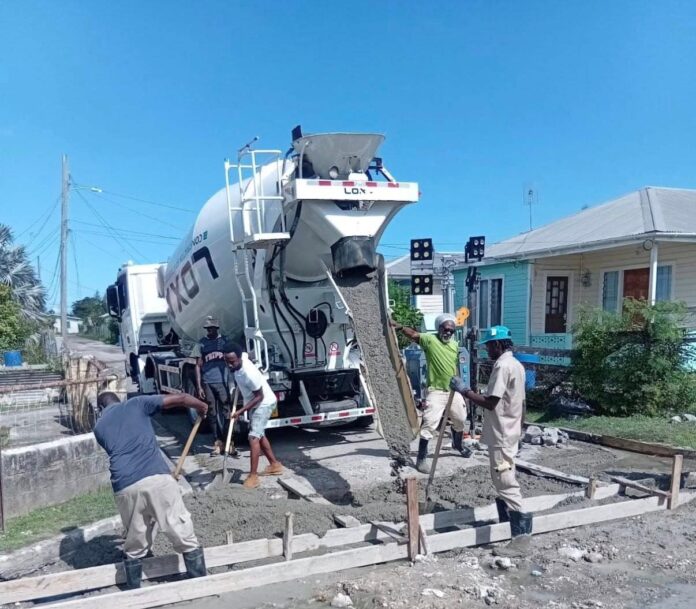

Prime Minister Gaston Browne says the government’s road construction programme will continue beyond the upcoming general election, insisting that funding is already secured and works are not tied to the political cycle.
Speaking on Pointe FM’s Browne and Browne Show, Browne sought to assure the public that ongoing infrastructure works will not slow or stop after the polls.
“No one should ever think that the roads will stop after elections, because we have monies committed… to continue to build out roads,” Browne said.
He indicated that at least $100 million has already been committed to the programme through a financing arrangement with local banks, in addition to funds being generated through government operations.
The prime minister said the administration has been using cash flow to fund current projects, while additional financing will support continued expansion of roadworks across the country.
“We’re using cash flows from government operations to fund these roads,” he said, adding that the additional funding will ensure sustained progress.
Browne described the current pace of construction as unprecedented, noting that roadworks are underway in multiple communities at the same time.
“This is the first time in the history of this country that anyone would have witnessed roads being built in every single community,” he said.
He acknowledged that not all roads can be repaired at once but said the government is taking what he called an aggressive and sustained approach to improving infrastructure.
“We can’t fix all the roads at the same time, but… we have it under control,” Browne said, adding that the bulk of the work could be completed within 12 to 18 months.
The prime minister also pointed to plans to strengthen the Public Works Department, including hiring additional engineers and skilled workers, as part of efforts to accelerate road construction and improve efficiency.
The remarks come as road conditions and infrastructure development remain key issues ahead of the general election, with the government highlighting its ongoing projects as evidence of delivery and long-term planning.
Browne maintained that the programme is part of a broader national development strategy and not an election-driven initiative.