
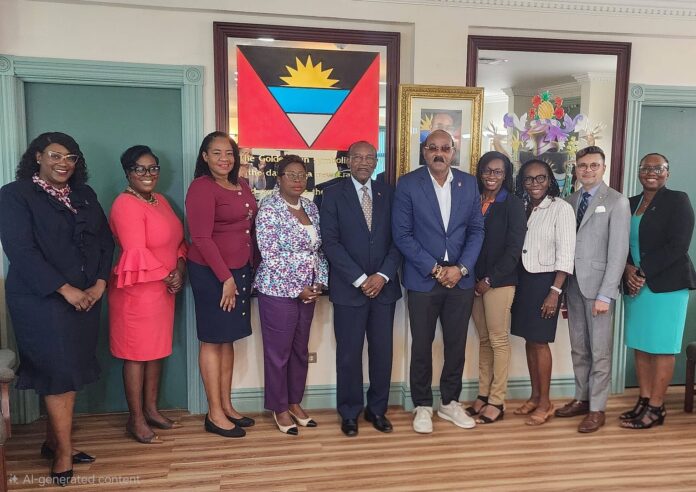

Under the continued leadership of the Honourable Prime Minister, Gaston Browne and the Honourable Minister of Health, Wellness, Environment and Civil Service Affairs, Sir Molwyn Joseph, Antigua and Barbuda is advancing a comprehensive and evidence-based reform of the nation’s mental health system.
This reform, forms part of the Government’s broader effort to strengthen the national health system and ensure that mental health services are fully integrated within modern, people-centred healthcare delivery. Anchored in legislative modernization, infrastructure development, and strengthened service delivery, the initiative reflects the Government’s commitment to ensuring that mental health care is, rights-based, evidence-driven and aligned with international best practice.
As part of this national agenda, the Ministry of Health hosted a high-level technical mission from 23–27 February 2026 in collaboration with the Pan American Health Organization (PAHO) Barbados and Eastern Caribbean Countries Office. The mission was designed to assess and strengthen the organization and integration of mental health services across the national health network.
Throughout the week, technical engagements examined the organization of services, integration within primary care, rehabilitation services, modernization of health information systems, and financing mechanisms necessary to support sustainable delivery. Further consultations were held on the advancement of the draft Mental Health Bill to ensure that legislative reform remains aligned with contemporary standards and the evolving service delivery model.
These assessments culminated in the development of a structured roadmap to guide phased implementation and strengthen system-wide integration across the national health network.
A central component of the Government’s reform agenda is the establishment of a Behavioural Health Centre that will serve as the foundation for wellness-oriented mental health care. While the Centre has long formed part of the national infrastructure plan, the recent technical consultations have further refined its scope, service delivery model, and integration within the broader health system.
The proposed model reflects a strengthened emphasis on integrated service delivery and recognizes the well-documented connection between behavioural health and overall physical health, including chronic conditions such as diabetes and cardiovascular disease. Beyond the treatment of mental illness alone, the Centre is designed to address behavioural factors that influence health outcomes across the lifespan, including stress management, emotional wellbeing, nutrition, physical activity, and other lifestyle-related risk factors. By embedding behavioural health within primary care, chronic disease management, and preventive health services, the system aims to deliver a whole-person, prevention-oriented, and recovery-based approach to care.
Importantly, the Behavioural Health Centre is designed to serve persons across the lifespan, including children and adolescents, and will provide support for early identification and intervention for behavioural concerns among young people, including those within primary and secondary school populations.
Historically, mental health services have largely focused on the treatment of individuals once illness has already developed. The reformed service model expands this approach by extending services to persons of all ages and placing greater emphasis on prevention, early intervention, and behavioural health promotion.
In keeping with this refined framework, the Centre will incorporate structured therapeutic services such as art therapy and music therapy to support emotional expression, trauma recovery, cognitive engagement, and social reintegration, while also promoting resilience, coping skills, and overall wellbeing.
Extending this recovery model beyond clinical settings, the reform initiative also includes the creation of a dedicated exhibition and social enterprise space in the city centre, where persons living with mental health disorders will be able to display and sell their art and craft. By situating this space within the community rather than at the treatment facility, the initiative intentionally promotes inclusion, reduces stigma, and supports skills development and economic participation as part of a broader pathway to empowerment and reintegration.
Antigua and Barbuda remains committed to building a modern, integrated, and compassionate mental health system that supports the wellbeing and dignity of all citizens.
-END-