
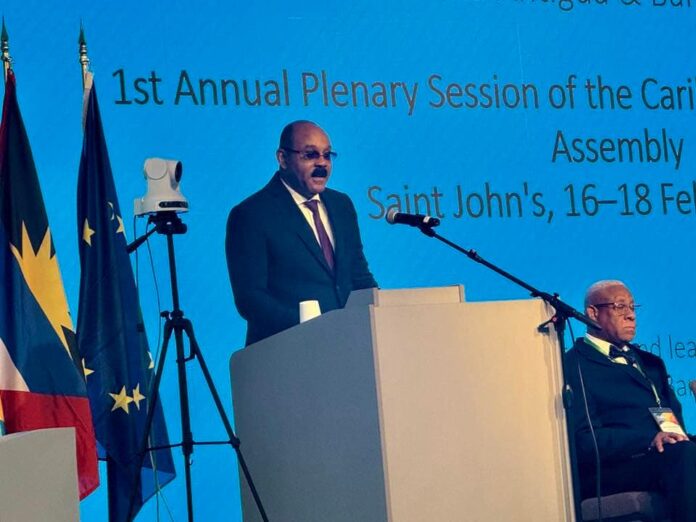

Antigua and Barbuda’s Citizenship by Investment Programme (CBI) took centre stage at the Caribbean–EU Parliamentary Assembly on Monday, as Prime Minister Gaston Browne mounted a strong defence of the initiative amid ongoing European scrutiny.
Speaking during the first sitting of the Caribbean–European Union Parliamentary Assembly at the American University of Antigua Convention Centre, Browne described CBI as a lawful and transparent development tool that has been critical to economic resilience across small island states.
The Assembly, which runs from February 16–18, brings together representatives from the Organisation of African, Caribbean and Pacific States and the European Union to advance cooperation under the Samoa Agreement, with discussions focused on climate resilience, renewable energy, trade, security and Haiti.
Browne said CBI programmes operate within clear legal frameworks and strong oversight, and have financed hurricane recovery, climate-resilient infrastructure, healthcare expansion, education development and fiscal stabilization.
He revealed that Caribbean nations have spent the past 18 months strengthening their programmes in consultation with the European Union, the United Kingdom and the United States. Dismissing suggestions that the initiative presents heightened risk, Browne argued that the due diligence, biometric screening and financial transparency standards applied are often more stringent than those required for some non-immigrant visas.
“The perceived risk associated with our citizens accessing the European Union is exaggerated,” Browne said. While acknowledging that citizenship policy remains a sovereign matter, he expressed hope for continued evidence-based dialogue with EU officials rather than unilateral restrictions as discussions on visa access and investment migration continue.