
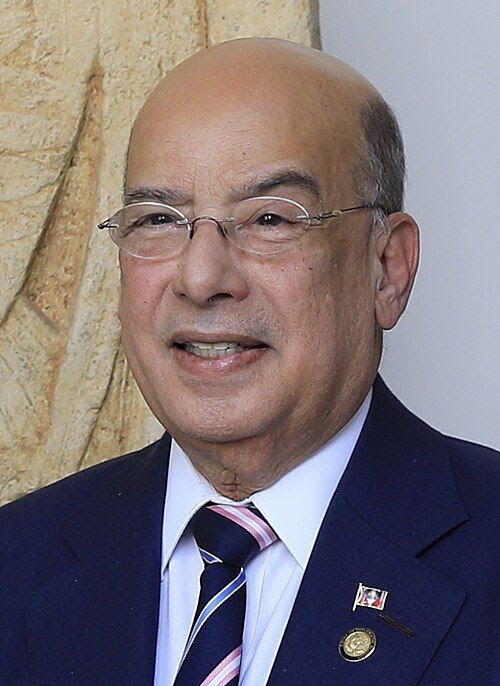

Sir Ronald Sanders (Image courtesy of Wikipedia)
By Sir Ronald Sanders
The failure of the United Nations Climate Change Conference in Antalya, Türkiye, to agree on an overarching decision addressing fossil fuels and adequate climate financing should occasion serious reflection among the governments of the Caribbean, Central America, Africa and the Pacific.
These regions contain many countries most exposed to climate change. Yet, despite their numbers and the scientific evidence supporting their case, they have been unable to secure commitments commensurate with the dangers they face.
Is there something more they could do collectively?
COP31, which ended on 22 November, was not entirely without achievement. Decisions were taken on adaptation, technology and a just transition, alongside voluntary initiatives on electrification and investment. But agreement proved impossible on the overarching decision intended to give direction and urgency to international action.
But references to fossil fuels, whose burning is the principal driver of global warming, were also removed from the proposed final decision. Also a proposed target of US$120 billion annually for adaptation financing by 2035 was removed from successive drafts. Even that financing target would have covered only part of developing countries’ estimated adaptation needs.
The United Nations Environment Programme’s report this month estimated those needs at US$305 billion annually by 2035. International public adaptation financing from developed to developing countries amounted to between US$28.2 billion and US$31.7 billion in 2024.
Financing for climate-related loss and damage is equally disturbing. The first round of applications to the Fund for responding to Loss and Damage produced requests amounting to US$2.8 billion against an initial funding envelope of US$342 million.
What are governments expected to do about the remainder?
Where Caribbean governments borrow for building climate resilience and for reconstruction, the burden passes to future generations, who will themselves be exposed to further disasters.
Much the same predicament confronts Central America. Floods, droughts and storms threaten agriculture, food security and employment. The consequences extend beyond national borders as people deprived of their livelihoods seek refuge elsewhere.
In Africa, droughts, floods and deteriorating agricultural land strain economies that already face serious developmental challenges. The African Group sought stronger adaptation financing at COP31. So, like Caribbean and Pacific countries, African nations have good reason for dissatisfaction.
However, African countries and small island states do not hold identical positions on every aspect of climate policy. Several African countries depend heavily on oil and gas revenues. Others have substantial populations without reliable electricity. Their governments understandably regard affordable energy as essential to economic development. Similar considerations apply to some Caribbean countries.
Ghana, speaking for the African Group, indicated that it would not obstruct consensus despite the proposed decision’s shortcomings. Several small island states could not accept it. Belize and Panama also rejected it.
But these differences need not preclude closer association on matters of common interest. Whatever their positions on fossil fuel production, vulnerable African, Caribbean, Central American and Pacific countries need adequate financing to protect their populations and economies without adding to burdensome debts.
Surely, something is fundamentally wrong when countries that contributed relatively little to global warming must incur further indebtedness to protect themselves from its consequences.
These countries have experience from which to draw.
The greatest negotiating success of the African, Caribbean and Pacific countries was their joint negotiation of the Lomé Convention in 1975 with the European Economic Community, the predecessor of today’s European Union. That idea was born in Guyana and nurtured by all the member states of CARICOM.
Acting together, 46 countries secured trade preferences, development assistance and arrangements to stabilise agricultural export earnings. Their unity gave them bargaining strength far beyond what most could have exercised separately.
The subsequent fragmentation of ACP trade negotiations into separate regional arrangements weakened that collective strength. The EU continued negotiating as one bloc while ACP countries faced it in smaller groups. Advantages secured through unity were diluted. Changing international trade rules also affected those arrangements, but fragmentation reduced the ACP’s capacity to defend its common interests.
That lesson should inform future climate negotiations. Regional interests need not be surrendered, but they should not displace collective bargaining on shared priorities.
There was evidence at Antalya that broader cooperation is possible. According to Carbon Brief’s account, 126 countries, including small island states, least developed countries, Latin American nations and EU members, jointly proposed revisions to the draft decision.
The challenge is to sustain such cooperation well before future conferences, rather than assemble it as negotiations approach their conclusion. Ethiopia will host COP32 in November 2027. Between now and then, CARICOM, the African Union, Pacific island countries and interested Central American governments could explore a sustained partnership.
It need not replace existing negotiating arrangements or require agreement on every climate issue. Its purpose would be to establish common positions on predictable adaptation financing, increased resources for loss and damage, greater access to grants and concessional loans, and financing eligibility that properly accounts for economic and environmental vulnerability.
These objectives must also be pursued beyond annual climate conferences.
International financial institutions have considerable influence over vulnerable countries’ capacity to withstand climate change. Their lending policies and eligibility criteria deserve as much coordinated attention as COP negotiations.
No country should imagine that greater numbers alone will overcome the economic and political influence of major powers. But sustained coordination across international institutions would provide greater bargaining capacity than separate efforts.
Their numbers would count through common proposals, coordinated diplomacy and political pressure, rather than votes alone. A small joint team, mandated to pursue agreed priorities, could ensure that common positions are advanced consistently between conferences. There is no merit in abandoning the multilateral system. For small countries especially, there is no satisfactory alternative to international cooperation. But there is considerable merit in examining how effectively they use the influence available to them.
In the nearly eleven years since the Paris Agreement, climate dangers have become more pronounced, protection costs have increased and financing has remained woefully inadequate.
Another year will pass before governments assemble in Ethiopia. For the world’s most vulnerable countries, that year should be spent not merely preparing for another conference but determining how they might collectively secure a better result from it. CARICOM leaders could again champion this cause alongside their counterparts in Africa and the Pacific, joined by those Central American governments willing to participate.
Their people cannot afford an indefinite succession of disappointed expectations.
(The writer is Antigua and Barbuda’s Ambassador to the US and the OAS, Chair of the Inter-American Council for Integral Development and Chancellor of the University of Guyana.)
This article was originally published by Antigua News Room. Read the original article here: COMMENTARY: After COP31: The World’s Vulnerable Nations Must Unite to Make Their Numbers Count.