
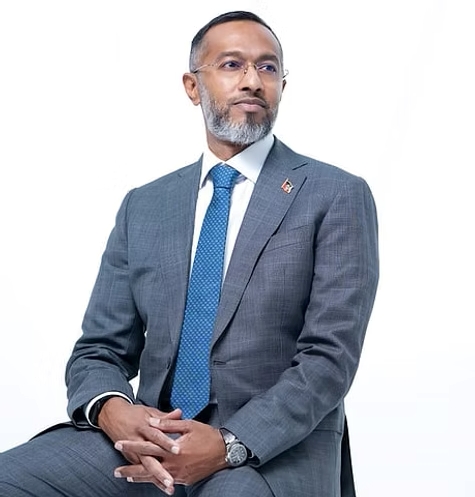

By H.E. Theon Ali, Ambassador of Antigua and Barbuda to the State of Qatar and the Syrian Arab Republic, and Deputy Head of Mission at the Embassy of Antigua and Barbuda in the United Arab Emirates
On a small island, world events are never abstract. We feel their impact at the petrol pump, in the market and when we turn on the kitchen tap.
That is why I am bringing one simple question to Tangier this week, where I am accompanying the Honourable E.P. Chet Greene, Minister of Foreign Affairs, Trade and Immigration of Antigua and Barbuda, to the 18th MEDays Forum: Will the agreements we reach here help make life more affordable back home?
The bill on the kitchen table
Start with electricity. Most of our power is generated using imported fossil fuel, so shifts in global markets quickly affect households. This year, electricity costs have risen by 44.3 per cent, adding pressure to every home, hotel, hospital and business.
Then there is food. Like many small islands, we import much of what we eat. Ordinary people have little say over geopolitical events, but they feel the consequences as those events ripple through the supply chain: higher fuel and shipping costs can mean a more expensive loaf of bread.
Then there is water. Desalination, which supplies much of our drinking water, depends on the same costly energy.
Food, water and energy are not three separate problems. Together, they make up one bill. That is the test I would apply to any partnership: can it lower that bill or make its costs more predictable?
Last weekend, climate talks in Antalya ended without consensus. Global agreements remain essential, but a family’s electricity bill cannot wait for nearly 200 countries to reach agreement.
This year’s MEDays theme, Fragmented World: Time for Choices, captures the question well. For small states, the choice is not whether to build new partnerships, but what those partnerships should deliver. They must be practical, grounded in shared values and common priorities, and focused on concrete projects, one sector at a time.
Partners with shared priorities
Many of those partners will be in Tangier. Qatar, a Gulf partner that has long made the developing world’s priorities its own, has spent the past decade building up domestic food production, strategic food reserves and water storage in a land with little arable soil and scarce fresh water. Its experience with food and water speaks directly to an island facing the same pressures, while its energy expertise can help us with the third.
Across Africa, Morocco has become a reference point for large-scale solar power and water innovation, and countries across the continent are pairing agricultural ambition with new trade corridors and climate-smart farming, work that could help lower what our households pay for power and food.
For the Caribbean, Africa is more than a diplomatic partner: it is family, bound to us by history and by a shared stake in the future.
What could practical partnerships look like? Solar and storage partnerships that move our grid away from fossil fuel. Cooperation on desalination that uses less energy for every litre. Shared purchasing or storage arrangements that steady the price of staple foods. Each is modest on its own. Together, they change what lands on the kitchen table.
Prime Minister the Right Honourable Gaston Browne’s vision is of a small state that helps shape the global agenda rather than simply receiving it. He has carried that case to this very forum, calling in Tangier in 2022 for deeper South–South partnerships to restore justice and equity, and urging last year that the countries bearing the brunt of conflict, inequality and climate damage should lead the reform of the systems that shape their future.
For him, reform has always been measured by its effect on people’s lives.
In Tangier, I will work alongside Minister Greene and our delegation to turn conversations into concrete partnerships with friends in the Gulf, across Africa and throughout the Global South. Guided by the leadership and vision of our Honourable Prime Minister, we will pursue partnerships that strengthen our resilience and deliver practical benefits for our people. In a fragmented world, small states cannot afford to wait to be included; we must build the partnerships we need. And we will measure their value as our people do: at the petrol pump, the market stall and the kitchen tap.
This article was originally published by Antigua News Room. Read the original article here: Op-Ed: A Fragmented World, and the Partnerships Small Islands Need.