
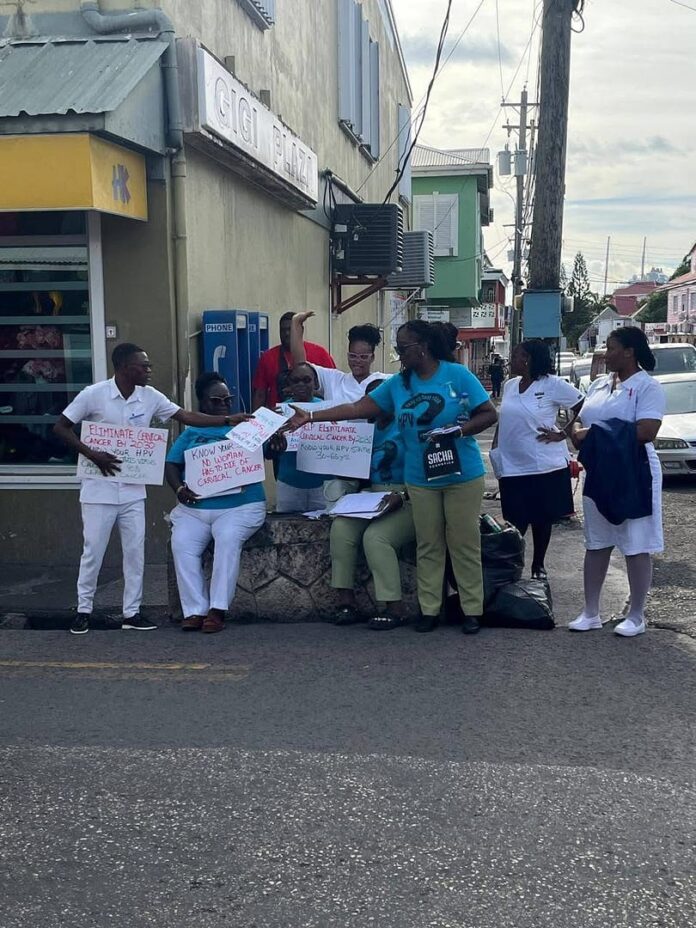

Healthcare workers from the Clare Hall Health Center recently took to the streets of St. John’s in a public awareness initiative aimed at educating citizens on the importance of knowing their Human Papillomavirus (HPV) status.
The team distributed informational pamphlets and displayed placards throughout the city, engaging members of the public in discussions about HPV, cervical cancer prevention, and the importance of early detection.
Speaking during the outreach activity, Nurse Gretcene Quallis highlighted the critical differences between HPV screening and Pap smear testing—two procedures that are often misunderstood.
“A Pap smear detects cancer or precancerous changes in the cervix, while HPV screening identifies the virus that can eventually lead to cervical cancer,” Nurse Quallis explained. “Many persons may carry the virus for 10 to 15 years without any symptoms, which is why early detection through HPV screening is so important.”
HPV screening is recommended for individuals between the ages of 30 and 65. If results are negative, screening is typically repeated every five years. However, if a high-risk HPV strain is detected, individuals are advised to return for further evaluation, including a Pap smear, to determine whether the virus has caused any cellular or precancerous changes. Additional diagnostic tests may also be conducted where necessary.
Nurse Quallis also emphasized the importance of prevention through vaccination. Individuals between the ages of 9 and 26, both boys and girls are encouraged to receive the HPV vaccine, which is currently available free of charge in the Clinics. The vaccine plays a vital role in protecting against the types of HPV most commonly associated with cervical cancer.
The Clare Hall Health Center continues to encourage the public to take proactive steps in managing their health by knowing their HPV status and accessing available screening and vaccination services.
This initiative forms part of ongoing national efforts to reduce and ultimately eliminate cervical cancer in Antigua and Barbuda through education, early detection, and prevention.