
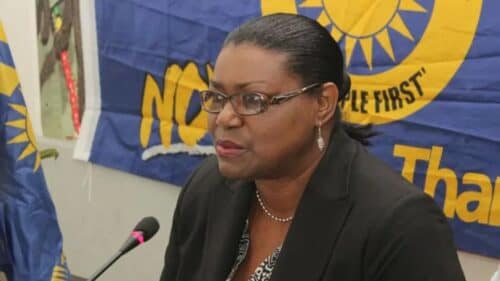

Former Speaker of the House and United Progressive Party Chairperson D. Gisele Isaac has criticized the handling of Opposition Leader Jamale Pringle at the May 26 joint sitting of Parliament, arguing in a column published on the Real News Antigua website that parliamentary officials allowed an administrative error to escalate into what she described as a partisan display of power.
In the commentary, Isaac said Pringle attended the joint sitting only after receiving an official summons and should not have been publicly ordered to leave after arriving at Parliament.
According to Isaac, Pringle had been invited by letter dated May 14 to attend the ceremony as an elected member of Parliament. She noted that parliamentary officials were already aware he had not taken the Oath of Allegiance on May 18 and that his absence from the swearing-in ceremony had been publicly explained beforehand.
Isaac said no effort was made to withdraw the invitation before the joint sitting, leading Pringle to attend as instructed.
She claimed Pringle was called to the office of Senate President Alincia Williams-Grant and informed that he could not remain in the chamber because he had not yet taken the oath. According to Isaac, Pringle requested that the matter be announced publicly in the House rather than handled privately.
Isaac contended that the situation could have been resolved differently and accused parliamentary officials of allowing what she described as an administrative error to escalate unnecessarily.
She also questioned why no effort was made to facilitate the administration of the oath before proceedings began, arguing that Parliament has the authority to regulate its own affairs.
The former Speaker further criticized the handling of debate surrounding the matter, including comments made by Prime Minister Gaston Browne during the sitting. She objected to language used to describe opposition members who later walked out of the chamber in protest.
Isaac defended the opposition’s decision to leave, describing it as a principled response to what she characterized as a partisan display of power.
She also criticized the conduct of parliamentary officials and expressed concern about the state of parliamentary democracy, arguing that the events surrounding both the May 18 swearing-in and the May 26 Throne Speech had diminished the dignity of the institution.
The government has previously maintained that elected representatives must take the Oath of Allegiance before participating in parliamentary proceedings, citing constitutional requirements.