

The AI story is usually told through chips, software, and computing power. Yet every new model also needs something far less virtual: a building capable of supplying enormous amounts of electricity, removing constant heat, and protecting expensive equipment around the clock.
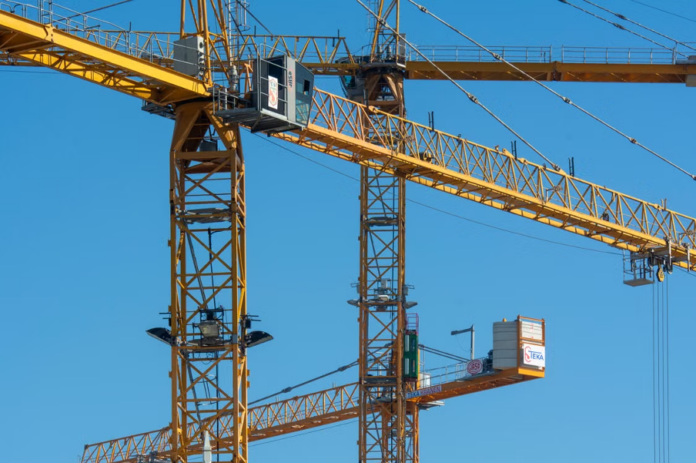
That requirement is turning AI growth into a major construction story. Data centers are getting larger, equipment loads are increasing, and developers are asking contractors to deliver complex facilities on unusually tight schedules.
From a Software Race to a Construction Pipeline
AI applications run primarily in data centers, and demand for those facilities is rising quickly. According to
the U.S. Department of Energy
, data centers consumed about 4.4% of domestic electricity in 2023. Their share could reach between 6.7% and 12% by 2028.
The construction impact extends well beyond the data center walls. A large campus may require new substations, transmission connections, backup generation, roads, water infrastructure, and nearby industrial development. In some markets, securing enough utility capacity has become more difficult than securing the land itself.
This puts pressure on the entire supply chain. General contractors need reliable subcontractors. Fabricators need material that matches the current drawings. Equipment manufacturers need frames, bases, enclosures, and structural supports. Suppliers such as
premiumplatesupply.com
contribute to this network by providing processed, traceable plates for industrial and construction applications.
The challenge is not simply supplying more steel. It is supplying the correct material, in the correct condition, when the fabrication schedule calls for it.
What Must Be Built Before the Servers Arrive
A data center may have a relatively plain exterior, but inside it functions more like an industrial plant than an office building. Thousands of servers operate continuously, producing heat and drawing power even when most nearby buildings are quiet.
Several physical systems make that possible:
A resilient power chain:
Utility connections, transformers, switchgear, battery systems, generators, and fuel storage must work together without creating a single point of failure.
Continuous heat removal:
Chillers, cooling towers, pumps, heat exchangers, piping, and increasingly liquid-cooling equipment keep computing hardware within safe operating temperatures.
Heavy equipment support:
Mechanical skids, electrical units, tanks, rooftop systems, and maintenance platforms require stable frames, base plates, connections, and anchoring points.
These systems also have to fit within a carefully planned footprint. A small dimensional change to a prefabricated cooling skid can affect support steel, piping, cable routes, lifting access, and maintenance clearances.
That is why coordination starts early. Designers use detailed digital models to identify conflicts before crews reach the site. Contractors increasingly rely on off-site fabrication and modular assemblies, reducing the amount of cutting, fitting, and welding that must be performed in crowded field conditions.
Where Processed Steel Plate Enters the Project
Steel plate is used in many of the components surrounding data center equipment. Typical applications include equipment bases, connection plates, skid frames, platforms, tank sections, stiffeners, brackets, and supports for power or cooling systems.
Raw plate rarely moves directly from the service center to the jobsite. It normally passes through a fabricator, where it becomes part of a larger assembly. Accurate processing before that stage can remove several time-consuming steps.
Professional
steel plate processing
may include high-definition plasma cutting, beveling, forming, rolling, blasting, and priming. Combining these services within a controlled workflow helps fabricators receive parts closer to their final production requirements.
Project need
Possible plate component
Processing consideration
Heavy equipment installation
Base plates and skid frames
Hole patterns and dimensions must support accurate alignment
Structural assembly
Connection plates and stiffeners
Consistent cuts reduce fitting time and unnecessary rework
Cooling infrastructure
Formed supports and tank components
Finished geometry must match equipment and piping layouts
Welded fabrication
Beveled plate edges
Proper edge preparation supports efficient weld fit-up
Documented material control
Specified carbon, alloy, or stainless plate
Mill test reports verify grade and material properties
Traceability deserves particular attention. When a drawing specifies a certain grade, thickness, or mechanical property, the purchasing team must be able to confirm what was received. Mill test reports and process records preserve that connection after the plate has been cut into individual parts.
Clear ordering information is just as important. Finalized part files, tolerances, bevel details, surface preparation requirements, and delivery sequences allow a processor to plan the work properly. An incomplete purchase order can create delays even when the material itself is readily available.
The Hardest Part May Be the Schedule
AI facilities are being planned at the pace of the technology industry, but construction still depends on physical constraints. A transformer cannot be downloaded, and a skilled electrician cannot be added to a project with a software update.
Four issues frequently shape the schedule:
Utility readiness:
A completed building has little value if the grid connection or substation is not ready to energize it.
Long-lead equipment:
Transformers, switchgear, generators, chillers, and specialized cooling components may require procurement decisions well before structural work begins.
Trade availability:
Electricians, pipefitters, welders, controls specialists, and commissioning teams are already in high demand across other industries.
Design revisions:
AI hardware changes quickly. Altering equipment late in the project can affect power distribution, cooling capacity, structural loads, and installation plans.
Contractors are responding with earlier procurement packages, closer supplier involvement, and standardized designs that can be repeated across multiple campuses. Some components are assembled off-site and delivered as modules, allowing shop work and site preparation to proceed at the same time.
Early purchasing is not a complete solution, however. It works only when teams maintain firm specifications and disciplined revision control. Otherwise, material ordered to save time may arrive before the design is stable.
How the Boom Could Reshape Industrial Development
The next phase of AI construction will not be spread evenly across the country. Developers will favor locations where power, land, fiber connectivity, permitting capacity, and skilled labor can be secured together.
That concentration could produce several long-term effects:
New regional investment:
Data center clusters can support utility construction, fabrication, transportation, maintenance, and specialized contracting work.
More off-site production:
Repeatable campuses are well-suited to modular skids, standardized supports, preassembled electrical systems, and other shop-built components.
Stricter resource planning:
Communities will examine how large projects affect electricity supply, water use, land development, and infrastructure costs.
The International Energy Agency expects
global data center electricity consumption to more than double by 2030. Meeting that demand will require investment not only in generating capacity, but also in transmission, substations, energy storage, and grid modernization.
Construction practices will change alongside that investment. Detailed material tracking, coordinated digital models, modular fabrication, and earlier collaboration with suppliers are likely to become standard on more industrial projects, not just data centers.
AI may be the reason these facilities are being commissioned, but their successful delivery depends on familiar disciplines: sound engineering, skilled trades, dependable materials, and careful execution. The technology is new. The need to build it correctly is not.
This article was originally published by Antigua News Room. Read the original article here: The AI Boom Is Transforming More Than Technology: It's Changing Construction.