
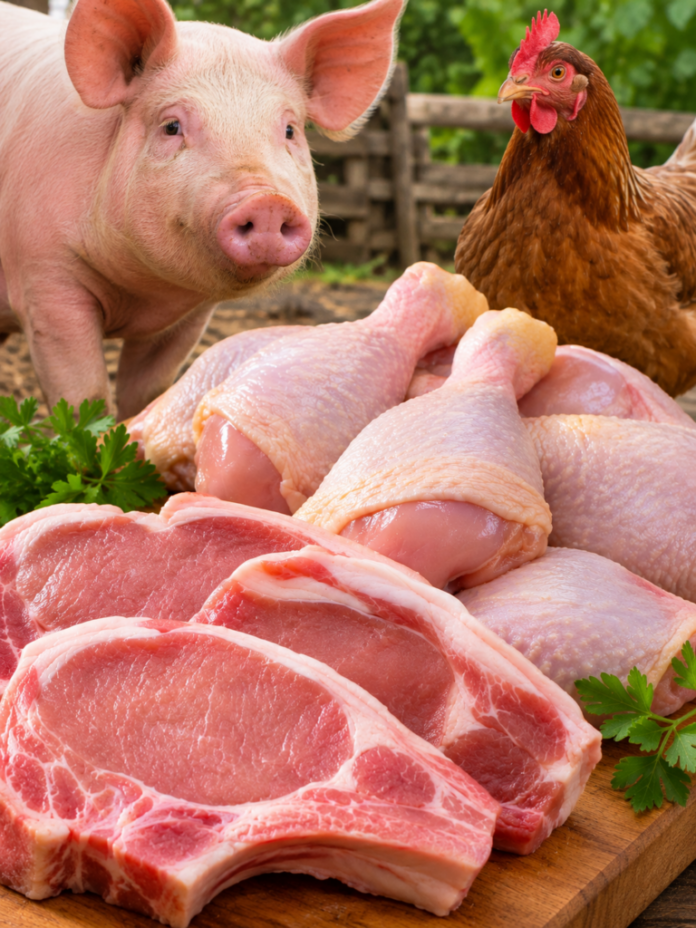

Chicken and pork prices in Antigua and Barbuda have declined over the past year, offering some relief to consumers despite sharp increases in beef, goat and lamb prices.
The latest Consumer Price Index (CPI) report, released Monday by the National Bureau of Statistics, shows that poultry prices fell 4.7% between October 2025 and October 2026, while pork prices recorded a much larger decline of 15.3%.
The decreases come as overall food prices fell 1.7% over the same period, even as the country’s annual inflation rate climbed to 8.6%.
According to the report, the poultry price index declined from 145.44 in October 2025 to 138.62 in October 2026.
Poultry prices also fell 3.7% between September and October, suggesting that consumers benefited from further reductions during the latest reporting month.
Pork recorded an even larger annual decrease.
The pork index fell from 147.15 in October 2025 to 124.66 in October 2026, representing a 15.3% reduction.
Between September and October, pork prices declined 2.8%.
The decreases contrast sharply with increases recorded in other meat categories.
Beef and veal prices jumped 17.8% in October alone and were 14.6% higher than a year earlier.
Meanwhile, lamb, mutton and goat prices rose 21.2% over the year, with a further 2% increase recorded in October.
The figures show that the cost of meat has moved in different directions across the country, with chicken and pork becoming cheaper while beef, goat and lamb have become more expensive.
The overall meat and meat products index declined 2.1% compared with October 2025, although it increased 0.9% between September and October.
Other grocery categories also recorded reductions.
Fish and seafood prices declined 9.9% over the year, while vegetable prices fell 7.4%.
The Statistics Bureau reported that the average price of broccoli dropped from $15.91 to $9.93, while cauliflower declined from $14.89 to $9.72.
These decreases contributed to the overall reduction in food prices.
However, consumers continue to face increases in several other grocery categories, including oils and fats, which rose 13.7% over the year.
The report does not provide average retail prices per pound for chicken or pork, nor does it identify the factors responsible for the reductions.
It also does not indicate whether the lower prices are expected to continue.
While falling chicken and pork prices may provide some relief at the supermarket, households are still facing higher costs in other essential areas.
Electricity prices increased 44.3% over the year, transportation costs rose 19.7%, and housing rentals climbed 9.3%.
The country’s overall annual inflation rate reached 8.6% in October, compared with 7% in September and 5.5% in August.
The latest figures show that although some food prices are declining, those savings are being offset by substantial increases in other household expenses.
For consumers, chicken and pork remain among the meat categories that recorded price reductions over the past year, in contrast to the sharp increases affecting beef, goat and lamb.
This article was originally published by Antigua News Room. Read the original article here: Chicken and Pork Prices Fall in Antigua and Barbuda.