
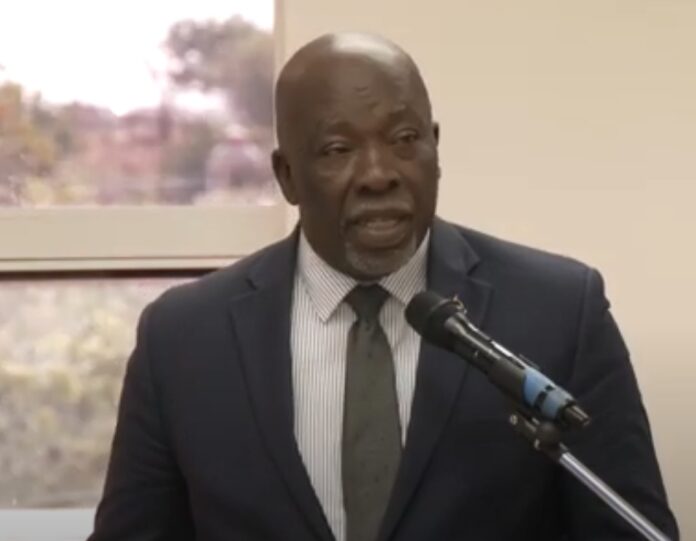

Antigua and Barbuda could expand its economy in 2027 by investing in government digitization, renewable energy, recycling, light manufacturing and agricultural production, Information Technology Minister Melford Nicholas said.
Nicholas outlined the opportunities during Pointe FM’s Taking Stock programme as he discussed the country’s economic outlook for the coming year.
He said the government intends to establish the infrastructure needed to automate and digitize all public services by 2030. Nicholas is expected to provide further details during his upcoming budget presentation.
The minister also plans to convene a forum during the first quarter of 2027 involving local information technology professionals and Antiguans and Barbudans working in the sector overseas.
Nicholas said several members of the diaspora who had developed computer systems, programmes and applications were identified during the CHOGM Business Forum.
He said their expertise could be combined with that of local professionals to help government ministries place services online and improve the use of public data.
Renewable energy is another area being considered for economic expansion.
Nicholas said planning had started for a large solar energy plant intended to reduce fossil fuel consumption by as much as 25% during the initial phase. Wind power would be introduced during a second phase.
The longer-term objective is for renewable sources to supply more than 80% of the energy consumed in Antigua and Barbuda within 10 to 15 years.
Nicholas said lower and more predictable energy costs could make recycling and light manufacturing more viable.
He suggested that scrap vehicles could be processed locally instead of being compressed and exported, allowing businesses to extract greater value from the metal while creating employment.
The minister also identified opportunities to recycle plastics and repulp discarded paper to manufacture cartons for eggs and agricultural products.
Agriculture would form another part of the proposed diversification effort.
Nicholas said locally grown ginger, tomatoes, carrots and other produce could be marketed more effectively alongside the Antigua Black pineapple. He suggested developing an “Antigua Black” identity for distinctive agricultural products grown under the country’s soil and climatic conditions.
Greater production could reduce food imports, supply hotels and restaurants and allow farmers to sell surpluses in neighbouring Caribbean markets, he said.
Nicholas also advocated stronger agreements between farmers, chefs, hotels and restaurants to increase the amount of locally produced food served to visitors.
He said keeping a greater share of tourism revenue within the domestic economy would require reducing the amount spent overseas on imported food.
The minister proposed holding a national business summit during the first or second quarter of 2027 to present investment opportunities and connect entrepreneurs with potential financing.
He said additional resources could also be directed to the Entrepreneurial Development Fund to support businesses operating in emerging industries.
Nicholas described the blue economy as being in its early stages, pointing to Antigua and Barbuda’s extensive maritime territory and the potential for greater commercial fishing and related enterprises.
He said the country had resources and economic assets that remained underused, arguing that technology, renewable energy and entrepreneurship could help turn them into new sources of employment and income.
Source: Information Technology Minister Melford Nicholas, speaking on Pointe FM’s Taking Stock programme.
This article was originally published by Antigua News Room. Read the original article here: Antigua and Barbuda looks to technology and manufacturing to broaden economy in 2027.