
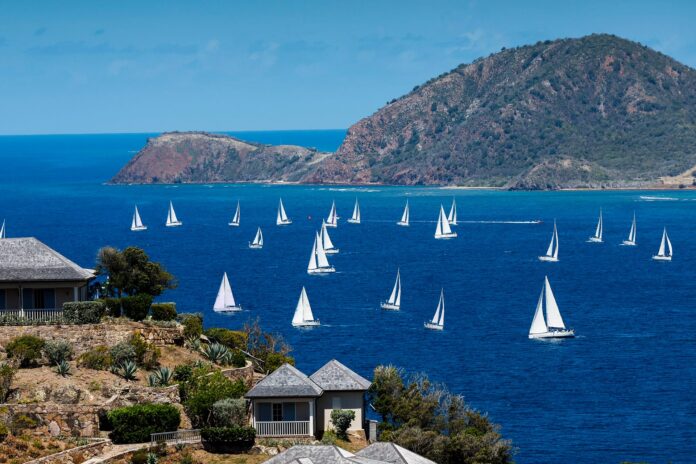

For more than half a century, Antigua Sailing Week has been one of the Caribbean’s most recognizable sailing events. For racers, it has meant tight courses off the south coast, competitive fleets, and long afternoons dissecting starts over cold drinks. For Antigua, it has meant full anchorages, busy docks, and a global spotlight on the island’s sailing culture.
So when word began to circulate that Antigua Sailing Week would be changing its format in 2026, it was natural for eyebrows to rise. Change, especially to something so deeply woven into Caribbean sailing history, invites questions. Why now? Who is it for? And does “change” mean leaving the past behind?
The short answer is no. What’s happening behind Antigua Sailing Week is not a departure—it’s an evolution shaped by the realities of modern sailing, shifting demographics, and the simple truth that how people experience boats, events, and time on the water has changed.
Listening to the Fleet
The decision to evolve Antigua Sailing Week did not come from a single boardroom conversation or a sudden desire to fix what wasn’t broken. It came from years of listening—listening to returning competitors, to charter companies, to cruising sailors anchored in English Harbour, and to local stakeholders who understand both the heritage and the future of sailing in Antigua.
According to Antigua Sailing Week President Alison Sly-Adams, the shift has been a thoughtful and necessary one.
“Antigua Sailing Week has always reflected the way people sail _now_ , not the way they sailed 20 or 30 years ago,” says Sly-Adams. “This evolution allows us to stay true to our competitive DNA while opening the door to a broader cross-section of the sailing community. It’s about preserving the spirit of the event while ensuring it remains relevant, accessible, and exciting for the future.”
Over time, a clear pattern emerged. While high-performance racing remains thrilling, the pool of sailors able to commit to multiple days of intense round-the-buoys competition has narrowed. Costs have risen. Crews are harder to assemble. Owners are increasingly balancing sailing ambitions with family life, work, and the desire for richer experiences beyond the racecourse.
At the same time, Antigua has become one of the Caribbean’s most vibrant cruising and charter hubs. Each season, hundreds of yachts pass through the island—many crewed by skilled sailors who may not identify as “racers,” but who relish sailing well, exploring new anchorages, and sharing the camaraderie that only life afloat creates.
Antigua Sailing Week’s evolution is, at its core, about meeting these sailors where they are.
A New Format, Rooted in Seamanship
Beginning April 22–26, 2026, Antigua Sailing Week will adopt a point-to-point, cruise-in-company format. Rather than returning to the same start line each day, fleets will sail purposeful coastal passages around Antigua, combining competitive elements with exploration, navigation, and the sheer pleasure of sailing from one destination to another.
This is not “racing lite.” Courses are designed to reward good seamanship, smart sail selection, and tactical decision-making—just expressed over longer legs and varied conditions. Think reaching along Antigua’s dramatic coastline, negotiating wind shifts around headlands, and finishing each day somewhere new.
For charter operators, the shift feels both logical and long overdue.
“This format finally reflects how our guests actually want to sail,” says a representative from an Antigua-based charter company. “They want to sail real miles, drop anchor somewhere beautiful at the end of the day, and still feel like they’ve accomplished something on the water. Antigua Sailing Week 2026 allows charter crews to participate without having to turn their holiday into a hardcore race campaign.”
For many sailors, this style of sailing is closer to why they fell in love with boats in the first place. It values performance, but also perspective.
Expanding, Not Replacing, the Community
One of the most important things to understand about the new Antigua Sailing Week is that it is not abandoning racers. Performance boats, rating systems, and competitive divisions remain integral to the event. What is changing is the invitation list.
Cruising yachts, charter boats, owner-operators, and mixed-experience crews are now actively encouraged to participate. The barriers to entry—both perceived and real—have been lowered. You no longer need a fully stacked race crew or a stripped-out boat to feel like you belong.
For charter providers, this inclusivity is key.
“We see a lot of confident sailors who shy away from regattas because they don’t see themselves as ‘racers,’” the charter provider adds. “This format removes that intimidation factor. It says, ‘If you can sail well and love being on the water, there’s a place for you here.’”
This shift reflects a broader trend seen across global sailing events: success is no longer measured only by who crosses the line first, but by how many people feel welcome on the line at all.
For _Sao Jorge, Harmony 52_ charterer, Charles Bayer and his team of 19 from Michigan, a passion for sailing and the camaraderie that comes from a shared competitive racing spirit, and Antigua’s warm weather and beautiful scenery were elements all too enticing to ignore.
“It’s a great time to leave Detroit where it is exceedingly cold plus we’re curious to try the new Antigua Sailing Week format – we first considered other regattas but thought that the first time with a group this size Antigua Sailing Week with its point-to-point sailing offers more of a laid-back race that focuses on tactics and boat speed and not as much crew work/sail handling as buoy racing,” he said. “We intend to race the daily optional windward leewards but we’re on vacation and the format is not so intense.”
The Shoreside Experience Still Matters
Ask anyone who has sailed Antigua Sailing Week what they remember most, and chances are the answers won’t be limited to results sheets. They’ll talk about sunset prizegivings, music drifting across the dock, and conversations that start with sail trim and end with lifelong friendships.
That spirit remains unchanged.
In fact, the evolved format enhances the shoreside experience by spreading activity across different parts of the island. Each stopover becomes an opportunity to highlight Antigua’s diverse anchorages, communities, and hospitality—connecting sailors more deeply with the island they are sailing around, not just past.
For Antigua itself, this means broader economic impact and a more sustainable model that benefits multiple coastal areas, not only one harbour.
A Reflection of the Caribbean Today
Antigua Sailing Week’s evolution mirrors a larger reality across the Caribbean. Sailing here has always been about more than competition. It’s about trade winds and traditions, about learning to read the water, about respecting both the sea and the communities that live alongside it.
By embracing a format that values passage-making, exploration, and inclusivity, Antigua Sailing Week is aligning itself more closely with what Caribbean sailing has always represented—adaptability, resilience, and joy in the journey.
Looking Forward
Change can feel uncomfortable, especially when tradition runs deep. But sailing itself teaches us that resisting change rarely leads to better outcomes. Wind shifts. Weather evolves. Boats—and events—must adapt.
Antigua Sailing Week’s new chapter is not about leaving its past behind. It’s about ensuring that future generations of sailors—racers and cruisers alike—can continue to experience Antigua in a way that feels authentic, achievable, and inspiring.
In many ways, the event is returning to its roots: sailors coming together, sailing well, and celebrating the simple magic of boats, wind, and island life.
And that, perhaps, is the most Antigua Sailing Week thing of all.