
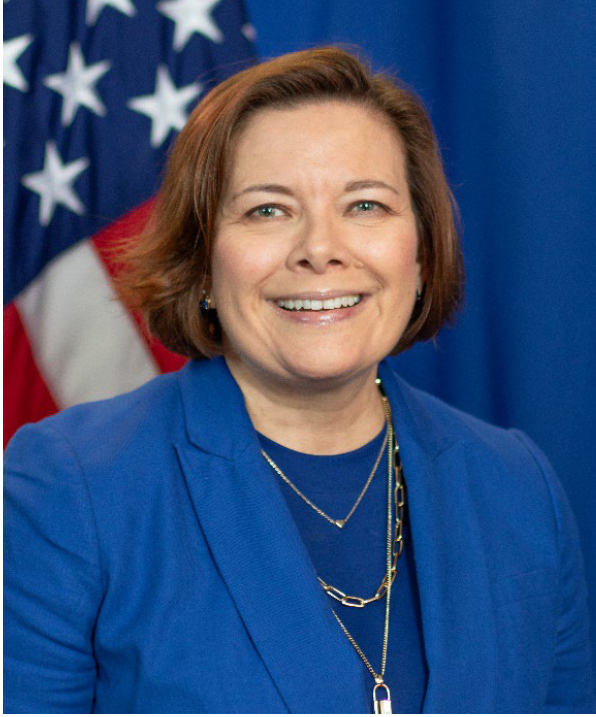

Op-Ed by Chargé d’Affaires Karin Sullivan, U.S. Embassy to Barbados, the Eastern Caribbean, and the OECS
In recent weeks, the Cuban regime has spread propaganda in Eastern Caribbean newspapers about hospitals without power, classrooms in darkness, and children waiting for care. The suffering of the Cuban people is real. But the regime’s explanation is false. For decades, the illegitimate regime has used its annual resolution at the United Nations to blame economic restrictions the United States has placed on our own nationals for all its troubles. Before the General Assembly votes on October 28, our Caribbean partners deserve the full story.
U.S. economic restrictions do not prohibit Cuba’s access to world markets or trade with other countries. U.S. law explicitly allows U.S. export of food, medicine, and medical equipment to Cuba. In 2025 alone, the United States exported more than $810 million in products to the island. Havana’s problem is not that the world is prevented from selling to Cuba; it is the regime’s own mismanagement and corruption.
The regime presents itself as a peaceful victim, and it is not. It is an aggressor that exports violence and destabilization across our hemisphere. For more than six decades, Havana has trained and armed tens of thousands of militants, helped build violent revolutionary movements across several continents, and supported extremist networks responsible for bombings, assassinations, armed robberies, and the murder of Americans. A regime that is friendly to our adversaries 90 miles from the U.S. coast threatens the security of our nation and every nation in the Caribbean.
So why do the lights go out? Because the incompetent regime puts itself first. From late 2024 through late 2025, Venezuela supplied Cuba with roughly 70,000 barrels of oil per day. The regime sold about 60 percent of that oil to Asia for hard currency instead of using it at home. In 2024, it spent 11 times more propping up its military-owned tourism industry than on healthcare and education combined. Empty hotels get electricity while Cuban children go without medicine and milk.
Who profits? Military-run conglomerates like GAESA control Cuba’s economy and hoard billions in overseas accounts while ordinary Cubans go without food and power. As Secretary of State Marco Rubio has said, “The suffering in the rural areas of Cuba is acute and deep. It’s not because of the embargo. It’s because they don’t know how to run an economy.”
The regime’s labor export scheme tells the same story. Here in the Caribbean, its medical brigades are wrongfully marketed as humanitarian aid.
In reality, the host countries pay large amounts per doctor, and the regime confiscates 50 to 95 percent of their wages, takes workers’ identity documents, and restricts their movement. That is not humanitarian work. It is forced labor.
The Trump Administration draws a clear line between the Cuban people and the regime that oppresses them. We have provided $9 million in direct humanitarian assistance through the Catholic Church to Cubans hit hardest by Hurricane Melissa. We are delivering another $100 million through Catholic Relief Services and Samaritan’s Purse. We can help Cubans without financing the dictatorship that impoverished them. Meanwhile, the regime holds more than 800 unjustly detained political prisoners, many of them jailed simply for speaking out.
Partners or allies that vote for the regime’s resolution enable a dictatorship that violently represses its own people, exports violence and radicalism, and threatens the stability of our hemisphere. We urge our Eastern Caribbean partners to publicly stand up to this dangerous rogue state and tell it to make real changes, not keep blaming others for its own failures. The Cuban people deserve a future free from the regime that has failed them, not another year of its excuses.
This article was originally published by Antigua News Room. Read the original article here: OP-ED: The Truth Behind Havana’s Darkness.