
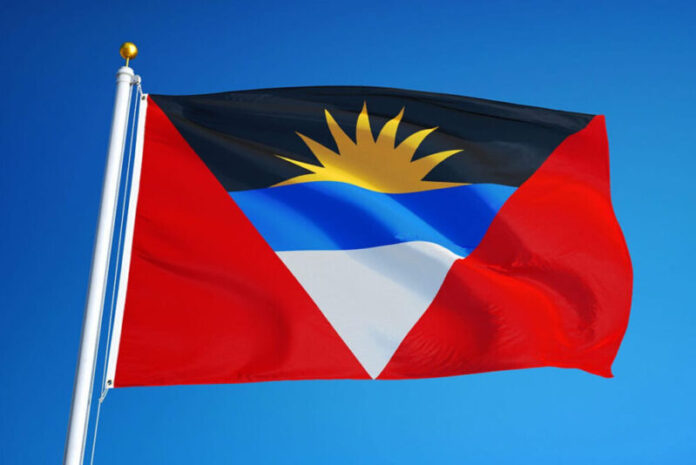

When economic independence becomes conditional upon the approval of powerful nations, one must question how much independence small states truly possess.
There is something fundamentally troubling about the way the international community continues to engage with small island developing states, particularly those in the Caribbean.
We speak of independence, sovereignty, democracy, self-determination and equal partnerships, yet the reality is that countries like Antigua and Barbuda are increasingly finding themselves at the mercy of mega-economies whose interests and geopolitical ambitions often take precedence over our right to determine our own future.
Antigua and Barbuda is a small developing nation with a population of approximately 100,000 people. The island of Antigua itself is just 108 square miles.
To put that into perspective, our entire population could comfortably fit into some relatively small, perhaps little-known city in the State of Nebraska. Yet, despite our size, we are expected to navigate the same increasingly complex global economic environment as countries with populations of millions, vast territories, enormous natural resources and economies capable of absorbing international economic shocks.
How, then, are we expected to survive?
Historically, our country has relied heavily on tourism, our Citizenship by Investment Program (CIP), and, more recently, the development of our education sector to sustain economic growth, generate revenue, attract foreign investment and create opportunities for our people. These are not necessarily perfect economic models, but they are among the instruments available to a small nation with limited natural resources and a narrow economic base.
The question we must ask is: What exactly are we expected to replace them with?
The Citizenship by Investment Question
Consider the ongoing pressure surrounding our Citizenship by Investment Program. The United States and the European Union have expressed concerns about the integrity, security and effectiveness of citizenship-by-investment Programs in the Caribbean. The European Union has gone as far as requesting that Antigua and Barbuda phase out its Program by June 2028, with the threat that continued operation could jeopardize our visa-free access to the Schengen Area.
Naturally, any legitimate concerns about due diligence, security, money laundering or the integrity of citizenship Programs should be taken seriously. We have an obligation to protect our country, maintain international confidence and ensure that our Program operates to the highest possible standards.
However, there is an apparent contradiction that deserves serious examination.
When individuals apply for citizenship under our CIP Program, the due diligence process involves international screening, information-sharing arrangements, external databases and international intelligence resources, including systems used by the United States and other international partners.
These international resources help us assess applicants and identify potential risks. The final decision to grant citizenship, of course, remains with Antigua and Barbuda.
So, when concerns are subsequently raised about the quality of our vetting and the possibility that individuals who obtain Antiguan passports may use them to gain access to other countries, should we not also examine the broader international screening arrangements that contribute to our due diligence process?
It is somewhat contradictory to participate in an international security ecosystem, provide access to information and intelligence resources, and subsequently frame the resulting Program as though the responsibility for every possible deficiency rests exclusively with the small country operating it.
This is not to suggest that international screening systems are infallible or that our government should abdicate responsibility for its decisions. Rather, if there are identifiable weaknesses, let us address them through cooperation, transparency and meaningful reform.
But there is a more fundamental question. Is the ultimate objective to strengthen our Program, or is the objective to eliminate it altogether?
Because those are two very different conversations.
If the concern is security, then let us strengthen security. If the concern is due diligence, then let us strengthen due diligence. If the concern is regulatory oversight, then let us improve our regulatory framework.
But if, regardless of the improvements made, the expectation is that we must abandon a significant economic instrument, then the conversation must extend beyond compliance to the economic consequences for our country.
The China Question: Must We Choose Sides?
Then there is the matter of our relationship with China.
China has been an important development partner to Antigua and Barbuda, providing assistance and cooperation in areas including education, agriculture, housing, infrastructure and other aspects of national development.
These are not merely diplomatic courtesies or symbolic relationships. They have tangible implications for the lives of ordinary Antiguans and Barbudans.
We have benefited from development assistance, educational cooperation, infrastructure projects and housing initiatives. These are areas in which a small developing state needs continued investment and support.
Yet, increasingly, there appears to be pressure from the United States for countries in our region to reconsider their relationships with China, particularly where strategic infrastructure, technology and economic cooperation are concerned.
The United States has legitimate national security interests, and it is entitled to express concerns about China’s growing influence. However, Antigua and Barbuda also has legitimate national interests.
Why must our relationship with China automatically become a problem simply because China is a geopolitical competitor of the United States?
Why must a small country be expected to choose between two major economic powers when it could benefit from maintaining constructive relationships with both?
China has assisted us in areas where we need assistance. If the United States believes that Antigua and Barbuda should reduce or sever aspects of that relationship, what is it prepared to offer in return?
Who will finance the housing projects? Who will support agricultural development? Who will provide the infrastructure assistance? Who will expand our educational opportunities? Who will provide the resources and technical cooperation necessary to advance our development agenda?
Where is the alternative?
It is particularly concerning that, while expectations are being placed on small countries to reconsider their relationships with certain international partners, the United States itself has been systematically restructuring and reducing its foreign assistance Programs since the current administration took office in January 2025.
The US Government Accountability Office reported in September 2026 that approximately 6,780 of 7,510 USAID awards had been terminated between January 2025 and March 2026.
So, on one hand, we are being asked to reconsider relationships with countries that have provided meaningful development assistance, while on the other hand, traditional assistance Programs are being reduced or discontinued.
How does that make economic sense for a country like ours?
We cannot be expected to abandon one development partner without knowing where the replacement resources will come from. We cannot build our national development strategy around the geopolitical preferences of another country.
Our foreign policy should be guided by the interests of Antigua and Barbuda, not by the expectation that we must participate in a geopolitical contest between Washington and Beijing.
We should be friends of all and enemies of none. Our international relationships should be determined by what advances our national interests, subject, of course, to responsible governance, transparency and the protection of our national security.
The Reinvention of Dependency
Sometimes, I wonder whether slavery ever truly ended, or whether it simply reinvented itself.
Our ancestors experienced physical subjugation, economic exploitation and the systematic control of their lives and resources. Today, we live in an era where countries are politically independent, have their own constitutions, elect their own governments and sit as equal members of the United Nations.
Yet, what does that independence mean when the economic survival of a country can be threatened through restrictions on international travel, access to financial systems, trade, development assistance and international investment?
What does sovereignty mean when a country is effectively told how to conduct its economic affairs, which international partners it should engage, and which development models it should abandon?
What happens when questioning those expectations results in additional pressure?
We must be careful not to confuse cooperation with submission. International partnerships should be mutually beneficial. They should be founded on respect, reciprocity and an understanding that countries have different economic circumstances and developmental realities.
The United States and the European Union are enormous economies with access to financial resources, sophisticated industries, vast domestic markets and the ability to absorb economic shocks. Antigua and Barbuda does not have those advantages.
We cannot simply replace one source of revenue with another because an international partner finds our existing economic model inconvenient.
And this is where the conversation about small island developing states must become more honest.
How, Then, Are We Expected to Survive?
Antigua and Barbuda is a country of approximately 100,000 people. We have limited land, limited natural resources, a relatively small domestic market and an economy that is heavily exposed to external shocks.
We are vulnerable to hurricanes, global inflation, rising construction costs, international interest rates, supply-chain disruptions, changes in tourism demand and the economic policies of countries thousands of miles away.
We import a substantial proportion of what we consume. We depend on international markets for food, fuel, construction materials, technology and other essential goods and services.
We are expected to provide healthcare, education, national security, public infrastructure, social protection and employment opportunities for our people, all while navigating an increasingly unpredictable global economy.
Tourism alone cannot reasonably be expected to carry every aspect of national development. It is vulnerable to recessions, pandemics, geopolitical instability and changing consumer behaviour.
Our education sector has potential, but it takes time, investment and strategic planning to develop it into a sustainable economic pillar.
Our CIP Program, whatever its shortcomings and whatever reforms may be necessary, has provided another avenue for attracting investment and generating revenue.
If these economic instruments are to be restricted, restructured or eliminated, what sensible and sustainable alternatives are being proposed?
Are we expected to simply increase taxation on an already constrained population? Borrow more money? Accumulate additional public debt? Reduce public services? Or watch our development ambitions become increasingly dependent on external financing and the goodwill of larger countries?
How, then, are we to survive if a small island of 108 square miles, with approximately 100,000 people, has no sensible means of generating meaningful income to keep pace with the changing economic tides of the world?
That is not an unreasonable question. It is a question of national survival.
We cannot be expected to compete economically with countries that have hundreds of millions of people, vast industrial bases and virtually unlimited access to capital, while simultaneously being discouraged from pursuing the limited economic opportunities available to us.
If the international community believes that our existing economic models are unsuitable, then it must be prepared to engage in a serious conversation about viable alternatives.
It cannot simply demand that we dismantle one economic pillar after another and leave us to figure out how to finance our development.
Independence Must Mean More Than a Flag
The Caribbean must begin to have a much more serious conversation about what economic sovereignty means in the twenty-first century.
Political independence is important, but it is not sufficient. A country that cannot independently determine its economic priorities, diversify its sources of revenue, establish international partnerships and pursue development opportunities without facing disproportionate external pressure is operating within significant constraints.
This is not an argument against international cooperation. Neither is it an argument that Antigua and Barbuda should disregard legitimate international standards or security concerns.
It is an argument for fairness, reciprocity and respect.
If our international partners want stronger due diligence, let us strengthen it. If they want greater transparency, let us provide it. If they have security concerns, let us address them through meaningful cooperation.
But if they want us to abandon economic opportunities and development relationships that contribute to our national survival, then they must be prepared to explain what replaces them.
We cannot continue to be told what we must give up without being shown what we will receive in return.
We cannot be expected to surrender economic opportunities in the name of international compliance while the same international partners offer no credible replacement strategy.
And we certainly cannot allow our national development agenda to become collateral damage in a geopolitical contest between superpowers.
Antigua and Barbuda does not have the luxury of choosing between geopolitical allegiances at the expense of its economic survival. We have a responsibility to our people, to future generations and to the preservation of our national independence.
We must engage the United States. We must maintain constructive relations with the European Union. We must continue our relationship with China. We must strengthen our partnerships throughout CARICOM, the OECS, Africa, Asia and the wider international community.
But we must do so on terms that recognize our circumstances and protect our national interests.
We are a small country, but our right to determine our future is not a small right.
Our independence cannot simply mean that we have the freedom to govern ourselves in theory while other countries retain the practical ability to determine the economic choices available to us.
The world must recognize that small island developing states are not geopolitical pawns. We are sovereign nations with people to feed, children to educate, homes to build, infrastructure to maintain and economies to sustain.
And if the answer to every economic challenge we face is simply to comply, surrender, withdraw or abandon another source of opportunity, then we must ask ourselves a very uncomfortable question:
What exactly did we gain independence for, if we cannot exercise the freedom to determine how we survive?
This article was originally published by Antigua News Room. Read the original article here: OPINION: The Price of Sovereignty: How are Small Island Developing States Expected to Survive?.