
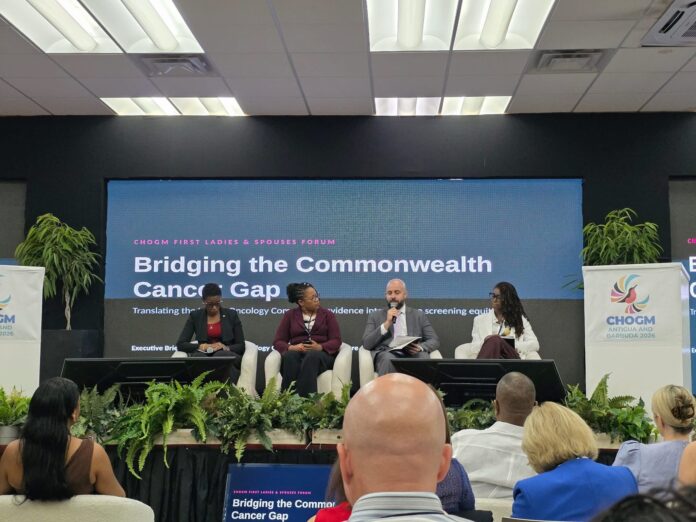

Antigua and Barbuda’s progress towards cervical cancer elimination was highlighted during the launch of the Spouses’ Programme at the 2026 Commonwealth Heads of Government Meeting (CHOGM), as Dr. Cherrie Tulloch, Head of the National Cervical Cancer Elimination Task Force, shared the country’s experience and key lessons in advancing cervical cancer prevention and care.
Dr. Tulloch outlined the three pillars underpinning the country’s programme: strong political will, the commitment and dedication of healthcare workers, particularly nurses, and regional and international partnerships. She highlighted the introduction of the national HPV vaccination programme in 2018, followed by a phased approach to HPV DNA testing, which included a demonstration project in 2022–2023 and a nationwide rollout in 2025. The programme, supported by the Ministry of Health in collaboration with the Pan American Health Organization (PAHO) and Basic Health International, has strengthened screening services, patient tracking and follow-up through the use of digital health records.
She noted that by October 2025, 62.9 per cent of eligible women had been screened, bringing the country closer to the World Health Organization’s 70 per cent screening coverage target. The programme also identified 411 women who tested positive for HPV and required follow-up care, underscoring the importance of ensuring that screening is supported by timely diagnosis, treatment and continued patient monitoring.
In sharing lessons for other Commonwealth countries, Dr. Tulloch emphasised the importance of adopting an integrated and sustainable approach that connects HPV vaccination, screening, diagnosis, treatment and follow-up. She encouraged countries to prioritise public education and community engagement, address misconceptions and stigma surrounding HPV, expand access through innovative approaches such as self-sampling and extended clinic hours, and invest in reliable health information systems to strengthen patient tracking and programme monitoring.
Dr. Tulloch also encouraged countries beginning their cervical cancer elimination journeys to assess their existing health-system capacity, identify champions within government and communities, build on established services and learn from the experiences of countries with similar circumstances. She stressed that cervical cancer elimination is an achievable public health goal, but requires sustained national commitment, adequate financing and collaboration. Antigua and Barbuda’s experience offers valuable lessons for other small and developing states seeking to strengthen prevention, improve early detection and ultimately eliminate cervical cancer as a public health problem.
This article was originally published by Antigua News Room. Read the original article here: Nearly 63% of Eligible Women Screened for Cervical Cancer in Antigua and Barbuda.