
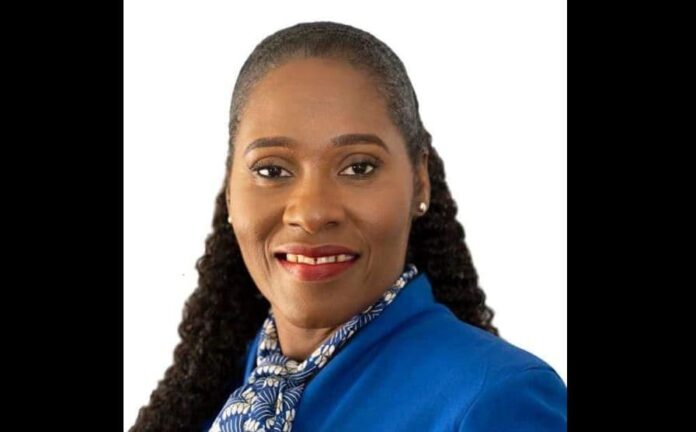

Opposition Senator Pearl Quinn-Williams on Wednesday challenged the government’s claim that the 2026 budget projects a surplus, arguing during the Upper House debate that the figures instead point to deficit spending masked by accounting choices.
Contributing to debate on the Appropriations Bill, Quinn-Williams said the government’s presentation of a primary and overall surplus excludes interest payments and relies heavily on borrowing, creating what she described as a misleading picture of the country’s fiscal position.
“There is no surplus,” she told the Senate, disputing projections outlined in the budget statement and asserting that once interest costs are accounted for, expenditure exceeds revenue.
Quinn-Williams cited figures from the budget documents and referenced calculations presented earlier in the Lower House, arguing that a government claiming a surplus should not simultaneously be borrowing more than EC$1.6 billion to finance spending.
She questioned why, if the country were truly in surplus, outstanding obligations such as public-sector back pay, salary upgrades and maintenance of government buildings and equipment remain unresolved.
“If you have a surplus, it means you have paid all your expenses from your revenue,” she said, adding that surplus funds should be available to meet basic obligations without additional borrowing.
The senator also challenged the credibility of surplus claims by pointing to unpaid suppliers, landlords and creditors, which she said contradict assertions of strong fiscal health.
During her presentation, Quinn-Williams echoed the opposition leader’s description of the budget as a “tax and thief” budget, while adding her own characterization of the fiscal narrative as “tricks, tales and talk.”
Her remarks prompted points of order and exchanges in the chamber, including an intervention from Government Senator Dwayne George, who accused her of misleading the public and defended the integrity of the Ministry of Finance’s technical staff.
Quinn-Williams responded that her arguments were based on figures contained in the budget presentation and Hansard records, insisting that her critique focused on the arithmetic behind the projections rather than the credibility of public officers.
The Senate President ruled that repeating figures cited in the Lower House formed part of legitimate debate, noting that disagreement over interpretation did not in itself constitute misleading statements.
Quinn-Williams said her intervention was aimed at promoting transparency and ensuring that fiscal claims made to the public withstand scrutiny.
“The figures are the figures,” she told senators, arguing that budget credibility depends on clear disclosure of borrowing, interest costs and the true balance between revenue and expenditure.
The Senate continued debate on the 2026 budget following her contribution.