
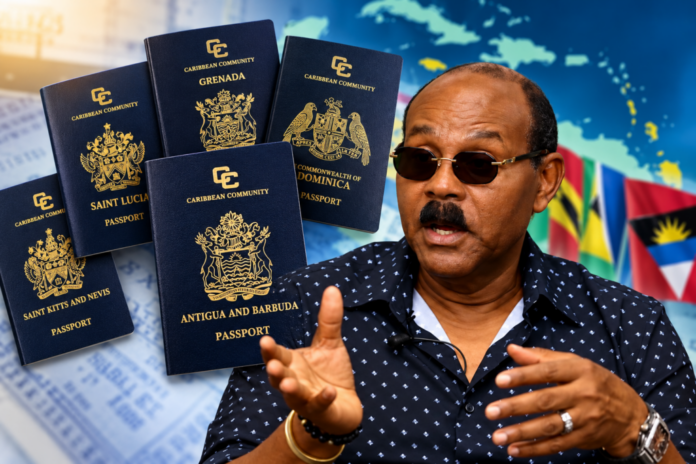

ST. JOHN’S, Antigua — Caribbean countries operating citizenship by investment programmes have asked the European Union for more time to decide whether they will phase out the programmes, Prime Minister Gaston Browne said Saturday.
Speaking on the Browne and Browne Show on Pointe FM, Browne said the EU had given the countries until the end of September to indicate whether they would agree to end their programmes.
The request comes as the EU increases pressure on five Eastern Caribbean countries — Antigua and Barbuda, Dominica, Grenada, St. Kitts and Nevis, and St. Lucia — over their investor citizenship programmes. EU rules now allow the operation of such a programme to be used as grounds for suspending visa-free travel.
Browne said regional leaders sought additional time because they want greater clarity on what conditions would apply if they agreed to phase out the programmes.
“We have said to them, look, we want to know precisely what your conditions are,” Browne said.
Among the issues requiring clarification, he said, are whether the EU would restrict the number of applications countries could process during a transition period and whether applicants from certain nationalities would be excluded.
Browne said a technical team is expected to meet with EU officials in October to work through those details.
“We need more information in order to make an intelligent decision,” he said.
The prime minister said the countries would then have to choose between continuing their programmes and potentially losing visa-free access to the Schengen area, or agreeing to phase them out under a negotiated transition period.
Browne said regional governments are also seeking as much time as possible before any phaseout takes effect, suggesting a transition of up to 2½ or three years could be pursued.
The EU has maintained that investor citizenship programmes present security concerns. Its latest assessment says the five Eastern Caribbean countries have strengthened safeguards, including security screening and regional standards, but that concerns remain over the programmes and the level of vetting.
Browne said governments would return to the public once the technical discussions with the EU are completed and a clearer framework is available.
This article was originally published by Antigua News Room. Read the original article here: Caribbean CIP Countries Ask EU for More Time to Decide on Ending Programmes.