

There can be no better time to raise this matter than when our King is on our soil.
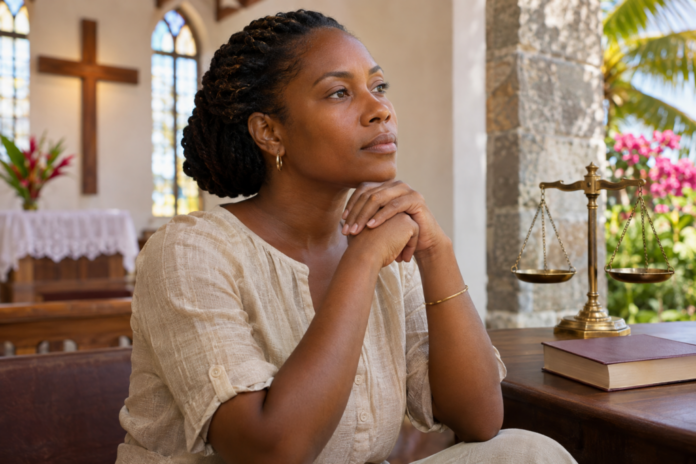
In both law and theology there is provision for the exercise of moral choice.
Chapter 2 of our constitution sets out the fundamental rights and freedoms it promises to protect. Very early at 3 (b) there is mention of freedom of conscience (p. 7), and then in section 11 on p.13 that notion is fully expressed:
” Except with his own consent, no person shall be hindered in the enjoyment of his freedom of conscience, and for the purposes of this section the said freedom includes freedom of thought and of religion, freedom to change his religion or belief … no person shall be required to receive religious instruction or to take part in or attend any … religion other than his own.“
In other words, our constitution recognizes that there can be no moral choice that is compelled or forced. Moral choice rests on freedom of choice.
Similarly, The Catechism of the Catholic Church at para. 1790 explains:
“A human being must always obey the certain judgment of his conscience. If he were to deliberately act against it, he would condemn himself.”
A devout Catholic is obliged to follow her or his conscience even if that action conflicts with church teaching.
To act against one’s conscience, in obedience to church dogma, is to sin. We are expected to act in good faith after a sincere examination of the situation before us. That is how we exercise our God-given free will.
Moral standards are not immutable. Slavery was once considered moral and was fully supported by the church. That changed and church leaders were important in the abolitionist movement.
Our strong stigma against women who have abortions is unworthy of us as Christians. First, it is our judgment of another. And second, it is hypocritical, since by age 44, 7 of every 10 women here will have at least one abortion. The same figure holds for men’s involvement. We are hurling stones at ourselves.
While we hang on to our criminal abortion law that England imposed on us, in April of this year, their parliament expunged the records of all women ever convicted of abortion from the 1800s. That is a loud apology for a law they long ago, 1967, recognized as wrong, harmful, ineffective and unjust. They moved from criminal to legal, and from legal to apology and forgiveness.
We have not yet made the first step. We still prefer punishment to education, and restriction to access.
Sincerely,
ASPIRE
This article was originally published by Antigua News Room. Read the original article here: LETTER: The Moral Choice of Abortion in Law and Theology.