
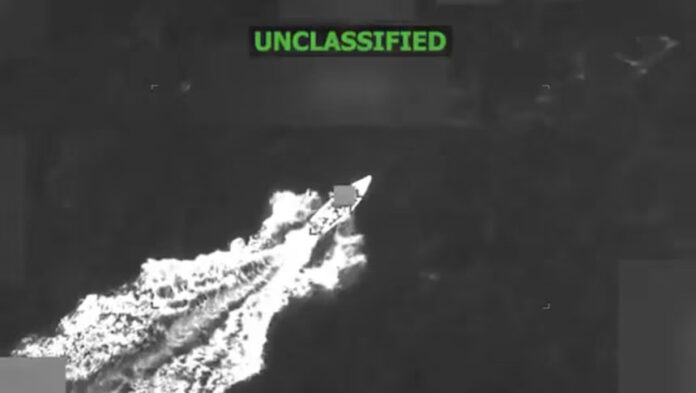

This screengrab taken from a video posted by Defense Secretary Pete Hegseth shows a boat shortly before it is struck by the US military in the Caribbean on November 6, 2025. Pete Hegseth/X
U.S. military strikes on suspected drug-trafficking boats in the Caribbean are among the allegations driving an impeachment effort against Defense Secretary Pete Hegseth, including accusations that survivors of an earlier attack were subsequently targeted.
Republican Rep. Thomas Massie introduced eight articles of impeachment on Monday, accusing Hegseth of unlawful military actions and abuses of power. The resolution challenges the legality of deadly boat strikes in the Caribbean and eastern Pacific, alongside U.S. operations in Iran, Venezuela and Yemen.
The boat-strike allegations raise questions about the administration’s authority to use lethal military force against suspected drug traffickers and its treatment of shipwrecked survivors.
Massie’s resolution alleges that the operations amounted to extrajudicial killings. Those accusations remain allegations and have not been established through an impeachment trial.
Much of the wider case concerns the war against Iran. Massie alleges that Hegseth conducted the campaign without congressional authorization and continued military operations beyond limits imposed by the War Powers Resolution. Other articles concern safeguards for civilians and alleged retaliation against Sen. Mark Kelly over his public statements.
Hegseth has rejected the impeachment effort as politically motivated and defended the administration’s military actions. President Donald Trump has also backed him.
A House vote could come this week. Approval would formally impeach Hegseth but would not immediately remove him from office. Removal would require conviction by a two-thirds majority of senators present.
This article was originally published by Antigua News Room. Read the original article here: Caribbean boat strikes feature in impeachment case against U.S. defense secretary.