
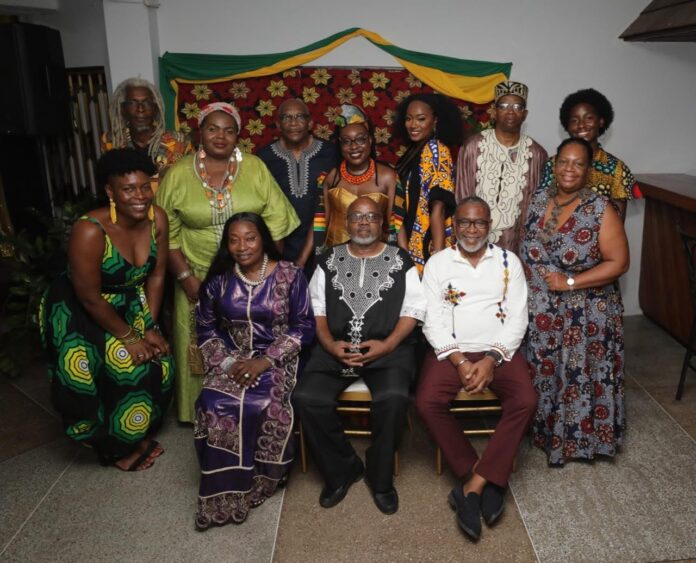

The Antigua and Barbuda Reparations Support Commission (ABRSC) welcomes the significant progress made in advancing the cause of reparatory justice during the recent Commonwealth Heads of Government Meeting (CHOGM), hosted in Antigua and Barbuda.
The outcome represents an important diplomatic milestone in the longstanding struggle for historical justice, as reparatory justice has gained further recognition and prominence on the formal Commonwealth agenda. In particular, the agreement by the United Kingdom to participate in structured, time-bound, inclusive and good-faith dialogue with affected countries on the transatlantic trafficking and enslavement of Africans and its enduring consequences marks an important development.
The Commission believes that we are considerably closer to meaningful engagement than at any previous time. Nevertheless, it is important to distinguish between diplomatic progress and the achievement of our ultimate objectives. While the commitments emerging from CHOGM are encouraging, neither a formal apology nor tangible reparations have yet been secured.
Dialogue is not an apology, and an apology, while important, is not reparations.
A formal apology would represent an important acknowledgement of historical wrongdoing and its devastating consequences. However, such acknowledgement must be accompanied by meaningful, measurable and sustainable action to address the profound social, economic and developmental inequalities inherited from centuries of slavery and colonial exploitation.
The ABRSC recognizes the importance of the collective leadership and advocacy of CARICOM, the African Union and other international partners in advancing this cause. The revised CARICOM Ten-Point Plan for Reparatory Justice provides a comprehensive framework for addressing the historical and continuing consequences of enslavement through education, healthcare, economic development, debt relief, technology transfer, cultural restoration and climate resilience, among other critical areas.
The Commission wishes to emphasize that reparatory justice is not about revenge, charity or assigning personal guilt to present generations. It is about acknowledging historical injustices, accepting the responsibility to address their consequences and establishing a more equitable foundation for future generations.
We must also reject the suggestion that reparations are an unrealistic or unattainable aspiration. Reparatory justice is a legitimate pursuit grounded in historical evidence, moral responsibility, international advocacy and established precedents.
History reminds us that, following the abolition of slavery in the British Empire in 1833, the British Government provided £20 million in compensation to former slave owners, while the formerly enslaved received no comparable compensation for generations of forced labour, suffering and exploitation. Indeed, the British taxpayer continued to service the debt incurred to finance compensation to enslavers until 2015. This historical reality raises an enduring question of justice and fairness: if compensation could be provided to those who benefited from slavery, why should meaningful reparatory measures for those who suffered its consequences be considered impossible?
Furthermore, reparations must not be reduced to the misconception of individual financial payouts. They encompass a broader programme of restorative and developmental measures designed to address structural inequalities and create opportunities for sustainable development. Strategic investments in education, healthcare, economic transformation, technology, infrastructure and climate resilience are all legitimate components of the reparatory justice agenda.
The international community has demonstrated, through various negotiated settlements and reparatory programmes, that historical injustices can be addressed through constructive engagement and political will. There is therefore no justification for dismissing the legitimate aspirations of the descendants of enslaved Africans and the nations whose development was fundamentally shaped by slavery and colonial exploitation.
The ABRSC remains cautiously optimistic about the progress achieved at CHOGM. However, the true measure of success will not be the number of declarations, expressions of regret or diplomatic meetings held, but whether these commitments translate into substantive negotiations, accountability and tangible outcomes for affected countries and communities.
The Commission calls on the people of Antigua and Barbuda, our fellow citizens throughout CARICOM and the wider African diaspora to remain actively engaged in the struggle for reparatory justice.
We must not allow cynicism, misinformation or negativity to undermine a movement that has taken generations of determined advocacy to bring to this important international stage. While constructive debate is welcomed, we must recognize that the pursuit of justice requires persistence, unity, informed public engagement and sustained political commitment.
Our struggle is not about revisiting the past for its own sake. It is about confronting historical truth, correcting enduring injustices and creating a fairer and more prosperous future for generations to come.
As a Commission, we remain committed to public education, advocacy and mobilizing national support for the reparatory justice movement. We encourage all citizens to become informed, participate in the conversation and lend their voices to this historic undertaking.
This article was originally published by Antigua News Room. Read the original article here: CHOGM: A Significant Step Forward In The Global Struggle For Reparatory Justice, says ABRSC.