
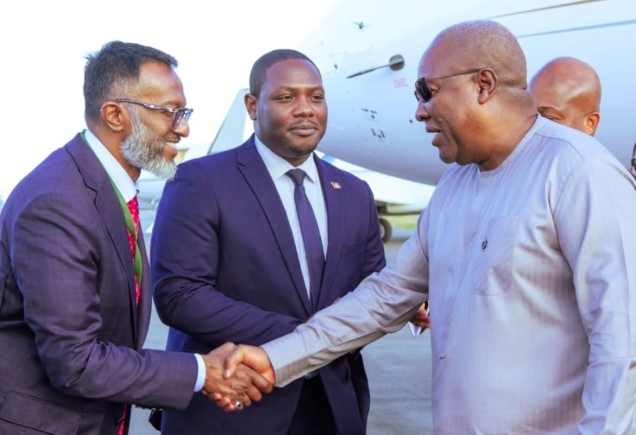

Ghanaian President John Dramani Mahama greets Minister Anthony Smith /photo credit: graphic.com.gh
Ghanaian President John Mahama has identified investment in education, health and economic growth, along with debt treatment, as possible forms of reparations for historical wrongs.
He has announced three working panels to examine practical ways to advance reparatory justice, as debate continues over how countries involved in the transatlantic slave trade should respond.
The proposals come amid British resistance to financial compensation. Prime Minister Andy Burnham has expressed willingness to consider an apology for Britain’s role in slavery but ruled out reparations payments sought by some Caribbean countries.
During the Commonwealth Heads of Government Meeting in Antigua and Barbuda, Burnham held discussions about a formal apology for Britain’s involvement in the trade, which transported an estimated 10 million to 15 million enslaved Africans to the Americas over four centuries.
British Foreign Secretary Ed Miliband has described financial reparations as “not feasible,” while indicating that Britain could pursue cooperation on other measures.
Mahama’s push follows the adoption in March of a United Nations resolution declaring the transatlantic slave trade “the gravest crime against humanity.”
The nonbinding resolution, championed by Mahama and supported by 123 member states, called on countries involved in the trade to engage in restitution and compensation.
The working panels are expected to explore how the broader demand for reparatory justice could be translated into practical interventions.
This article was originally published by Antigua News Room. Read the original article here: Mahama identifies education, health and debt relief as pathways to reparations.