
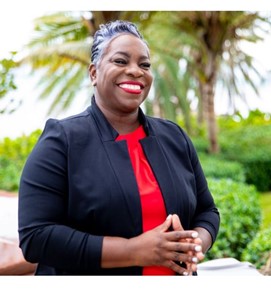

Ambassador-at-Large Samantha Marshall has endorsed Education Minister Daryll Matthew’s proposal for a 9 a.m. to 3 p.m. school day, saying supervised afternoon activities could help tackle youth violence and better prepare students for employment.
Marshall, an attorney and former minister of social transformation and human resource development, said the current gap between secondary school dismissal and the end of parents’ working day leaves teenagers without adequate supervision.
“At 1:30 every weekday afternoon, our secondary schools open their gates and release thousands of teenagers into the island. Their parents are at work until four or five. For three hours or more, nobody is in charge,” she wrote in a public Facebook post.
“We should stop pretending that this is fine.”
Her intervention follows Matthew’s announcement on the Browne and Browne programme on Saturday, Nov. 14. Responding to a listener’s question about the 1:30 p.m. dismissal, the minister outlined a proposal to bring primary and secondary schools onto a common 9 a.m.–3 p.m. schedule, with public consultations beginning in January.
Matthew said the later start could ease morning traffic, while the later finish would reduce the time students spend unsupervised before their parents return from work. He also referred to an earlier pilot that provided additional time for extracurricular activities. Town halls would gather public feedback before a decision on proceeding.
The proposed secondary timetable would shift the start from 8 a.m. to 9 a.m. and dismissal from 1:30 p.m. to 3 p.m. Although students would leave 90 minutes later, the total school day would increase by half an hour. Matthew described the proposal as a shift with potentially significant benefits, rather than a substantial increase in instructional hours.
Marshall said she fully supported the change, arguing that efforts to address youth violence must pay closer attention to the afternoon hours.
“A curfew deals with the night. The danger is in the afternoon,” she wrote.
She proposed using afternoon sessions for coding, technical and vocational skills, agriculture, entrepreneurship, sport, music and supervised homework.
“That is how we turn idle afternoons into employable young people,” she said.
However, Marshall said implementation would require proper consultation with teachers, fair compensation for any additional hours, and activities that offer meaningful enrichment.
“Support for the idea is not a blank cheque. Teachers must be properly consulted and fairly compensated for any extra hours, and the afternoon must be filled with real enrichment, not just more of the morning.”
She also called for buses and school meals to accommodate the proposed timetable. The ministry, she said, should publish results from the earlier pilot and track attendance, examination performance and incidents involving young people after any change.
Marshall urged parents, teachers, principals, students, churches and employers to participate in the town halls.
“We can keep ending the school day while the working day is in full swing and hope for the best, or we can give our children a full day of learning, activity and adult guidance,” she wrote.
This article was originally published by Antigua News Room. Read the original article here: Proposed school hours in Antigua and Barbuda win Marshall’s support.