

A small state’s sovereignty is not for sale
By Professor C. Justin Robinson
Pro Vice-Chancellor and Principal, The UWI Five Islands Campus
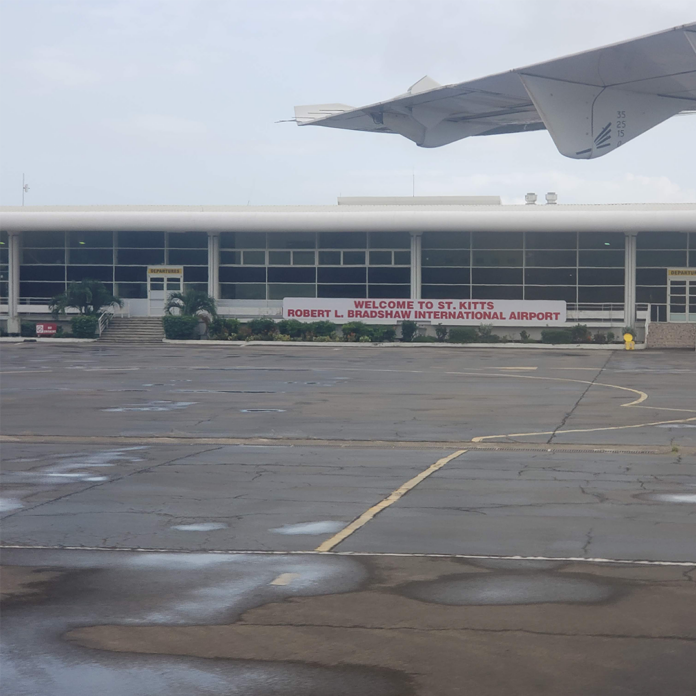
Three men landed in Basseterre on 19 May 2026. They were not criminals, they were not threats, they were simply in the wrong place at the wrong time and the United States wanted them gone.
They were CARICOM nationals from Jamaica and Belize, transferred under a bilateral arrangement.
Now Antigua and Barbuda has published a White Paper setting out terms on which it might consider receiving a strictly limited number of third-country nationals removed from the United States. How did the Caribbean arrive at this point?
Antonio Gramsci, writing from Mussolini’s prison cells in the 1930s, gave us this insight: “The crisis consists precisely in the fact that the old is dying and the new cannot be born, in this interregnum a great variety of morbid symptoms appear.”
“When one order collapses and another has not yet arrived, politics fills with monsters.”
The Caribbean knows this pattern. We have been offered other people’s unwanted cargo before, toxic waste, decommissioned ships and questionable goods.
The packaging changes, the asymmetry does not. This is not the first time the Caribbean has been asked to absorb someone else’s problem, and it won’t be the last.
The post-Cold War order is fraying. No successor has established broad legitimacy, not China, not a divided Europe, not an inward-looking United States.
What we have instead are fragments, an emerging “multipolar” world that looks less like balance and more like a brawl with no referee. The monsters are not coming, they are here.
The first monster is the US deportation policy itself. Small Caribbean states are being asked to help the United States execute its migration policy by receiving people who are not their nationals and who may have no family ties, shared language, lawful status or durable future.
The administrative term is third-country removal, in plain language, it is outsourced deportation. The first monster is deportation dressed as partnership, and we must name it as such.
The second monster is the language used to sell the policy. At a Cabinet meeting in April 2025, US Secretary of State Marco Rubio said the United States was seeking countries willing to take some of the “most despicable human beings” and added that “the further away from America, the better.”
Consider who actually landed in Basseterre. The three individuals were transferred for immigration violations not a single criminal conviction among them. Rubio’s “most despicable human beings” met Basseterre as three people who overstayed visas.
That language was designed for a domestic audience taught to see certain migrants as threats. We do not consume US political theatre we assess facts. This is the vocabulary of a great power making human beings sound disposable before a receiving country has examined a single file. It may serve US domestic politics, but it must not become our vocabulary.
The deportees are not abstractions, they are parents, siblings, neighbours, people who made mistakes, people who sought better lives. That does not erase the rule of law, but it should erase the language of disposal.
No responsible Antiguan or Barbudan wants to admit anyone who presents a serious danger, but strength does not require dehumanization. Security begins with verified facts, complete records and sovereign assessment, not labels. We can insist on borders, law and safety without treating people as cargo. The second monster is dehumanization dressed as security, and we must refuse its vocabulary.
The third monster is diplomatic asymmetry. As of July 2026, Antigua and Barbuda is being asked to help Washington with a sensitive migration problem while its own nationals face significant restrictions on new US visa issuance. The asymmetry is plain, we are good enough to receive Washington’s removals, yet our travellers must pay for the privilege of being believed.
That cannot be treated as a side issue as it goes directly to reciprocity, dignity and national interest. If Washington asks St. John’s to help address a US migration problem, Washington must address how our nationals are treated under US visa policy.
This is not about selling people for visas. Human beings must never become bargaining chips. But if Antigua and Barbuda is asked to assume legal, financial, social and political risk for the benefit of the United States, it must insist on clear, written and measurable benefit for its own nationals.
To its credit, the Government’s White Paper recognizes much of this. It rejects a standing monthly transfer programme and preserves complete sovereign discretion. Its counterproposal contemplates no more than ten people in 2026, followed by a review in 2027. It sets meaningful exclusions and insists that before any person departs, written commitments must be secured for legal status, full funding, healthcare, welfare and return arrangements.
Most importantly, the White Paper makes a distinction many citizens already understand, full funding, full vetting, clear legal status and return responsibility are minimum protections, not reciprocal benefits. And it says plainly that any reciprocal benefit should include lifting blanket visa restrictions on nationals of Antigua and Barbuda.
That is the point that must be strengthened. The visa question must remain on the same diplomatic file. Antigua and Barbuda should not accept open-ended risk in return for a mood, a courtesy or the hope of favour later. Parliamentary scrutiny should precede any operational transfer.
Small states are not powerless. The United States calls our region its “third border”, a phrase that acknowledges our strategic indispensability. That gives us standing to negotiate, not merely to accept. Sovereignty is not a gift; it is a muscle and muscles that are not exercised atrophy. The third monster is the diplomatic asymmetry and we must address the imbalance.
The fourth monster is partisan reflex. This issue must not collapse into the usual question, are you for the Government or against it? The Government has a duty to disclose, the opposition has a duty to scrutinize, and citizens have a duty to demand seriousness from both.
Across the political divide, the minimum position should be clear:
- No standing programme and no automatic admission.
- No transfer without complete biographical, biometric, medical, criminal and protection-claim information.
- No one with a criminal record beyond immigration-law violations, unresolved asylum claims, or cases resting only on expedited removal.
- No departure until full cost coverage, legal status and return responsibility are secured in writing.
- No arrangement without parliamentary scrutiny or while US visa restrictions remain outside the negotiation.
That position is not anti-American; it is pro-Antigua and Barbuda and friendship between states is not obedience. Mature diplomacy allows a small state to say, we value the relationship, we recognize the power, we will listen respectfully, but we will not become a dumping ground for another country’s unresolved migration cases, and we will not accept one-sided risk while our own nationals are bonded, restricted or presumptively treated as a problem. The fourth monster is the descent into partisan politics. This is issue is not a test of party loyalty but a test of sovereignty.
The real danger is not only what Washington asks. It is how we respond to one another. The monsters thrive when compassion is mocked as weakness, caution is dismissed as disloyalty, scrutiny is branded sabotage, and foreign political slogans become local common sense.
We should not borrow our moral language from Marco Rubio’s crudest line. Nor should we build our diplomatic posture on anger alone. We should be clear-eyed, firm and united around lawfulness, limitation, full funding, full vetting, parliamentary oversight, reciprocal visa treatment and the sovereign right to say no.
The monsters are not the migrants. The monsters are outsourced deportation dressed as partnership, dehumanization dressed as security, diplomatic imbalance dressed as friendship and domestic partisan reflex dressed as patriotism.
We defeat all four by remembering who we are. A small state, yes, but not a small people. A friend of the United States, yes, but not a subordinate. A country prepared to cooperate, yes, but only on terms that protect our citizens, our laws, our capacity and our dignity.
The test is not whether we accept ten people. The test is whether we accept a framework in which ten becomes twenty, and twenty becomes indefinite while our own citizens wait years for visas and post bonds to visit their families. That is the threshold, which is where sovereignty begins.
This article was originally published by Antigua News Room. Read the original article here: OPINION: The Monsters Are Not the Migrants.