
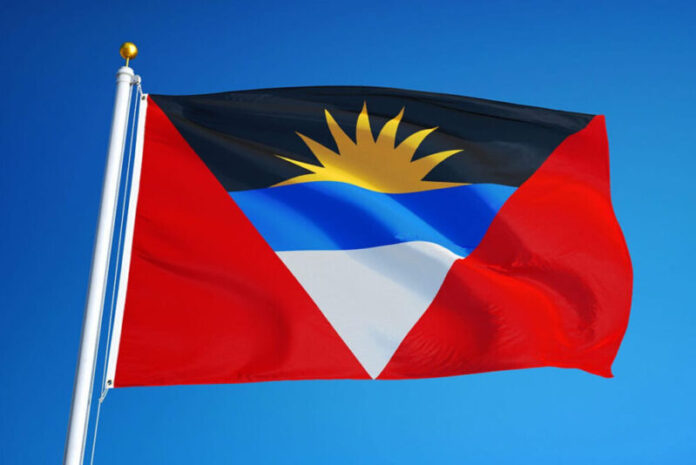

There are moments in the life of a nation when history leans forward and asks a question it has already made possible. Antigua and Barbuda stands in such a moment.
The constitutional amendment that took effect on 1 January 2026, replacing four decades of oaths sworn to the British monarch with an oath of allegiance “to the state of Antigua and Barbuda, its Constitution and laws,” has already carried the nation across a symbolic Rubicon.
In the general election of April 2026, the electorate returned a government with a commanding mandate, and the new Cabinet became the first in the country’s history to be sworn to the state rather than to the Crown.
A Constitution Review Committee has been established to consider the transition to republican status, with a referendum to follow “at the appropriate time”. The scaffolding of constitutional reform is in place; what remains is patient consultation, sound design, and democratic consent. This article argues, from historical-political, theological, psychological, and sociological perspectives, that the present is the favourable hour for the completion of Antigua and Barbuda’s independence.
From the standpoint of history and political theory, the argument is one of completion rather than rupture. The English settled Antigua in 1632; its sugar economy was built on enslaved African labour; emancipation came in 1834; and constitutional self-government arrived by stages through associated statehood in 1967 and independence in 1981.
Independence in 1981 established Antigua and Barbuda as a sovereign state, yet the constitution retained a hereditary British monarch as head of state; a republic would not confer sovereignty for the first time, but it would align the nation’s constitutional self-definition with its lived reality. John Locke’s Second Treatise of Government insists that legitimate authority rests on the consent of the governed, that no one is born to rule over others.
By that standard, the deepest question is not whether monarchy is illegitimate, but whether the change itself is authorised: consent in a modern democracy is a living thing, renewed through consultation and, for so fundamental an alteration, a referendum.
Prime Minister Gaston Browne has framed the project precisely as an act of national self-definition rather than hostility: it is “the final step to complete that circle of independence, to ensure that we are truly a sovereign nation”. A parliamentary republic, with a ceremonial Antiguan head of state chosen by and from among the people, would let the constitutional text and the nation’s identity finally coincide.
Theological reflection deepens rather than distracts from this argument, because Scripture speaks to how human beings may rightly order common life. Genesis 1:27 declares that every human being is made in the image of God, bearing equal and inalienable dignity. A constitutional order in which one family is elevated above all others by the accident of birth, and one family in another nation, at that, sits uneasily beside the imago Dei. When the disciples jostled for rank, Jesus answered: “You know that those who are considered rulers of the Gentiles lord it over them, and their great ones exercise authority over them. But it shall not be so among you. But whoever would be great among you must be your servant.” (Mark 10:42–43, ESV). The republican ideal, a head of state who serves and can be identified with, rather than reigns and is set apart, resonates more nearly with that vision of leadership as διακονία (diakonia). Scripture also sounds a warning about concentrated power: in 1 Samuel 8, the people’s demand for a king is granted, but Samuel foretells how such power seizes sons, daughters, fields, and servants for its own aggrandisement. The Bible prescribes neither monarchy nor republic; it prescribes justice, humility, and the dignity of the person, principles against which any constitutional order must be measured, and against which a settled foreign monarchy struggles to justify itself in a self-governing nation.
Psychologically, the matter of symbols is never trivial, for symbols shape self-perception. Frantz Fanon, in Black Skin, White Masks and The Wretched of the Earth, argued that colonial domination colonises the mind before it is ended in law, teaching the colonised to measure themselves by the standards, faces, and institutions of the coloniser. The generations born after emancipation and independence in Antigua and Barbuda have grown up in a state whose most solemn rituals, the oath, the head of state’s portrait, the honours system, have pointed loyalty toward a distant Crown. The quiet significance of the new oath in 2026, when for the first time ministers pledged themselves to “the state of Antigua and Barbuda,” can be read as a Fanonian act of collective self-naming. To be clear, no constitutional amendment automatically heals the wounds of history, and there is no psychological defect in those who feel affection for the monarchy; rather, national symbols are pedagogical instruments. A child in Urlings or Codrington who could, in principle, aspire to every office in the republic, including the highest, would receive a different formation in self-worth than one who could not. The decolonisation of the symbolic order is a legitimate work of national maturity.
Sociologically, Émile Durkheim, in The Division of Labour in Society and The Elementary Forms of Religious Life, taught that societies cohere through shared symbols, rituals, and a “collective conscience,” and that a modern nation-state needs a civic core around which all its communities can gather. Antigua and Barbuda’s challenge is to build solidarity across two islands with distinct histories and grievances, and a home-grown presidency could provide a shared civic symbol that belongs to neither party nor parish. The Barbadian precedent of 2021, and the wider regional movement toward republics, shows that the transition can be accomplished peaceably, with Commonwealth membership retained and parliamentary democracy intact. Yet Durkheim would also warn that symbols bind only when they are shared; a republic pursued without broad participation could become a hollow ritual rather than a source of solidarity. This is why the government’s insistence on consultation, education, and a free referendum, of moving only when “the people are ready”, is not delay but the very substance of legitimacy. Churches, schools, trade unions, and village councils should be enlisted as the workshop of the national conversation, so that the referendum becomes an act of collective self-authorship rather than a partisan tally.
In conclusion, the καιρός (kairos), the opportune moment, has arrived. The oath has been transformed, the review committee has been established, the government enjoys a fresh mandate, and the region has shown the way. What is proposed is not hostility to Britain or rejection of the Commonwealth, but the closing of a circle opened in 1981: a state in which every symbol, every office, and every allegiance belongs to the people of Antigua and Barbuda themselves, subject always to their free decision at the ballot box. Locke’s consent, Scripture’s equal dignity and servant leadership, Fanon’s liberated mind, and Durkheim’s shared conscience converge on the same conclusion, that now, while the moment is favourable and the institutions of reform are engaged, the nation should complete its independence deliberately, inclusively, and without fear. A republic will not by itself feed the hungry, house the poor, or reconcile Barbuda’s concerns; but it could give the nation a truer mirror of itself, and a people who have already changed their oath know the way to their own head of state.
This article was originally published by Antigua News Room. Read the original article here: COMMENTARY: The Favourable Hour: Why Now Is the Time for Antigua and Barbuda to Become a Republic.