
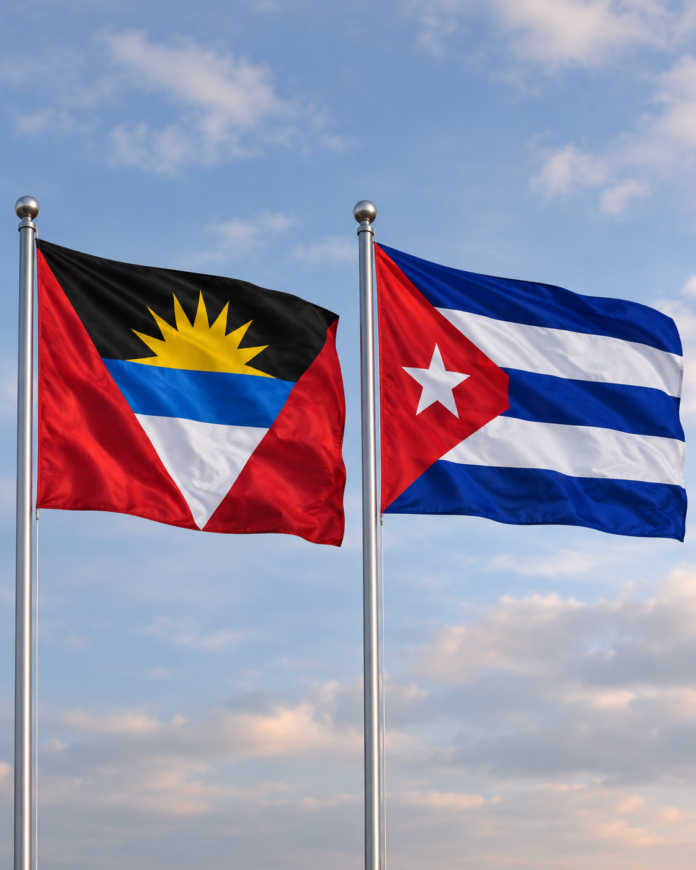

Antigua and Barbuda changed its intended support for a United Nations resolution calling for an end to the U.S. embargo against Cuba after American officials warned that backing it could jeopardize negotiations over visa restrictions, Prime Minister Gaston Browne said Saturday.
The country ultimately recorded no vote when the U.N. General Assembly adopted the resolution Oct. 28 by 130 votes to 17, with 25 abstentions. Antigua and Barbuda was marked absent, a departure from its support for the resolution in 2025.
Speaking on the Browne and Browne Show, Browne said the government had planned to support Cuba but changed its position following a call from the U.S. State Department.
“We had decided to support Cuba on a resolution recently and changed our position because we had a call from the State Department,” he said.
Browne said U.S. officials indicated that negotiations over visa restrictions were progressing and warned that supporting Cuba could undermine those efforts.
The government subsequently instructed its ambassador in New York to abstain. However, Browne said the ambassador did not attend the vote, and he could not explain why.
“Our instructions to the ambassador in New York was to abstain. I noticed he did not show up, I don’t know what happened,” he said.
His account explains the government’s intended change of position but leaves unanswered why the country was recorded as absent rather than among the abstentions.
The annual, nonbinding resolution calls for an end to the United States’ economic, commercial and financial embargo against Cuba. It records international opposition to the restrictions but does not itself lift them.
Antigua and Barbuda’s non-participation also contrasted with its recent public advocacy for Cuba. In September, Ambassador Walton Webson told the General Assembly that Cubans should not suffer collective punishment for political disagreements and urged a return to diplomacy between Washington and Havana.
Browne’s disclosure came in response to a message from a resident who said their U.S. visa had expired and they were unable to travel to be with their gravely ill mother.
He said the resident could try to obtain a visa but described the prospect as difficult. State Department officials were working to resolve the broader restrictions, he said, while attributing the decision behind them to the White House.
Browne maintained that Antigua and Barbuda had good relations with the United States and questioned whether concerns beyond the Citizenship by Investment Programme were influencing Washington’s position.
He said the government would continue pursuing diplomatic channels but could not guarantee a resolution.
“We’re still trying, but it’s not something we have any control over,” he said.
This article was originally published by Antigua News Room. Read the original article here: Antigua and Barbuda changed Cuba vote position to protect U.S. visa talks, PM says.